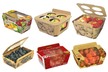
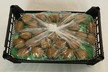
A Brussels start-up producing mushroom-based packaging has opened a new facility as it works to expand beyond its current niche market. Permafungi, which has operated for a decade using coffee-ground substrates to grow edible mushrooms, now aims to apply its mycelium-based material to packaging applications.
At the new production site, the company is manufacturing mycelium forms for uses such as soap bar wrappers. The material, grown in molds filled with waste inputs including sawdust, develops into a spongy mass that is dried and delivered as packaging. Mycelium is sourced from mushrooms collected in the Sonian forest near Brussels.
Company founder Julien Jacquet said the production process relies on waste materials, recycled rainwater, and solar-powered infrastructure. "Here, we just watch the mushrooms grow," he said. He described the project as an alternative to petroleum-based packaging that is often imported from distant markets.
Permafungi has received €2 million (about US$2.2 million) in EU funding and additional regional support. The Swiss fund Apres-Demain, led by Thierry Mauvernay, has invested €1 million (about US$1.1 million). According to fund manager Sebastien Beth, the objective is to support companies using local resources, but he noted that Permafungi "needs to be profitable within two to five years."
Jacquet reported that the company is adding new collaborations with wineries, a watch brand, and a candle maker, and aims for €3 million (about US$3.3 million) in turnover within three years.
Across Europe and the United States, mushroom-based biomaterials have been developed since the mid-2000s. Luc Vernet of Farm Europe said the challenge for such products remains scale and cost, noting competition with fossil-based materials when oil prices are low.
EU institutions are preparing to release a bioeconomy strategy that includes support for biomaterials. Packaging waste remains a concern, with EU data showing that each European resident generated nearly 190 kilograms of packaging waste in 2021. Projections indicate an increase to 209 kilograms by 2030 without policy changes.
Permafungi's new factory is located near a former Audi plant that closed earlier this year, affecting around 3,000 workers. Jacquet said he views the initiative as part of efforts to reintroduce industrial activity into urban areas.
Source: PHYS.org