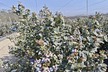
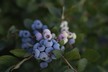
Researchers from the Botanical Research Institute of Texas (BRIT) and the University of Florida have identified the evolutionary origin of Hawaii's wild blueberries. The findings, published in the American Journal of Botany, show that the islands' native blueberries, known as ʻōhelo, came from temperate East Asia rather than North America.
The study suggests that Hawaiian blueberries, which are found on six of the eight main islands, traveled across the Pacific Ocean about 5 to 7 million years ago. The species are now an important food source for native birds and hold cultural significance for local communities.
DNA analysis revealed that the Hawaiian plants are most closely related to Vaccinium yatabei, a species native to Japan. According to Dr. Peter W. Fritsch, co-senior author of the study and research scientist at BRIT, "This is a rare pattern among Hawaii's native plants. Only 4% of Hawaiian plants are estimated to have come from temperate East Asia, whereas most arrived from North America or tropical regions."
The researchers propose that migratory birds carried the seeds from northern regions to Hawaii by consuming the berries and dispersing the seeds during flight. Once in Hawaii, the plants adapted to high-elevation environments with wet and cold conditions. The species now commonly grows on fresh lava flows on Hawaii's youngest island, where few other plants can survive.
Further DNA evidence indicates that the Hawaiian blueberries later spread to Southeastern Polynesia, where they hybridized with other species. The research even suggests a reverse migration event, with at least one species returning to coastal North America.
The study's timing aligns with the geological emergence of Kauaʻi, Hawaii's oldest major island. Early arrival likely allowed the blueberries to diversify before other plant groups established themselves.
Field observations and specimen analyses indicate that Hawaii may have 15 to 18 distinct blueberry species, far more than the three currently recognized. This revised classification could inform future conservation efforts for ʻōhelo and other native Hawaiian plant species.
Source: Phys.org