Indian apples have a distinct market rhythm right now, moving through overlapping fresh supplies from Kashmir and imported Northern Hemisphere fruit to Himachal apples, followed by Southern Hemisphere arrivals, explains Anuj P Chaurasia, Founder of Freshos Enterprise.
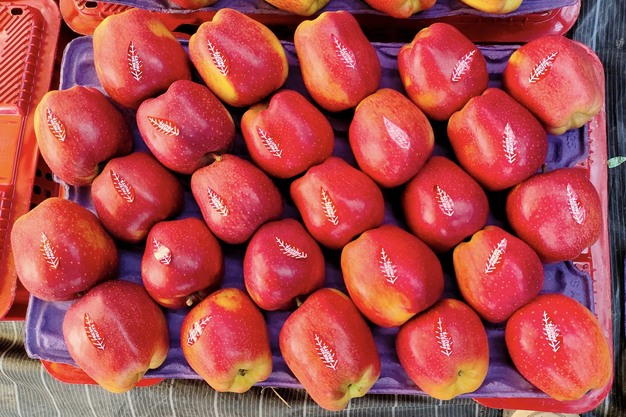
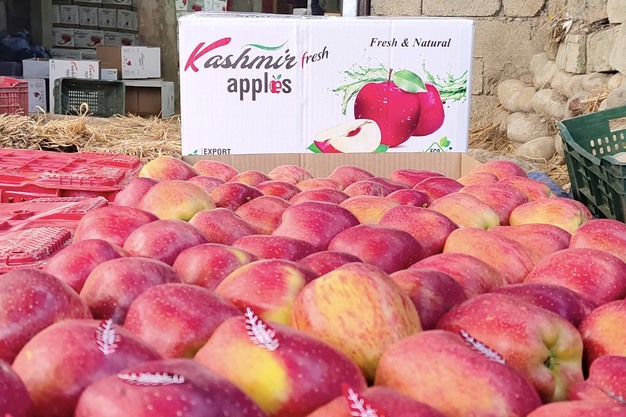
"The market first welcomes Kashmiri apples, priced between USD 0.5 and 0.8 per kg. The apples from Himachal Pradesh and Kashmir dominate the market starting from July-August through December, forming the early season supply. Imported Northern Hemisphere apples are predominantly from Iran, Turkey, Poland, Italy, and Afghanistan are also available during this period, particularly being sold in southern India. He adds, "Kashmir apples arrive as the Himachal season tapers, and typically have a good shelf life, making them crucial for distant markets like South India where transportation poses challenges."
 © Freshos Enterprise
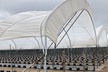
Controlled atmosphere storage plays a big role in keeping Himachal apples fresh for longer. "Big apple companies in India run large CA chambers, mostly storing Red Delicious apples, managing thousands of metric tons of storage capacity in Shimla. These storages help to slow ripening, thereby reducing spoilage and balancing supply throughout the season."
Chaurasia points out key shifts in import trends this season: "Afghan apples are arriving by sea via Mumbai's Nhava Sheva port instead of overland through Delhi. This route keeps them fresher and more competitively priced in the south but limits their presence in northern markets due to higher costs. Iranian apples continue to be imported steadily throughout the domestic apple season, typically priced at USD 1.3 to 1.5 per kg."
 © Freshos Enterprise
He adds, "Turkish apples, once a major origin, have seen reduced availability and quality this year, leading Indian importers to explore alternatives. Imports from Poland, Italy, Greece, and the U.S., particularly Washington state apples, are gaining traction due to their quality and availability, providing competitive options for the market. From mid-February, Southern Hemisphere apples from New Zealand, Chile, Brazil, Argentina, and South Africa arrive at a premium price, generally between USD 1.7 and 2.2 per kg."
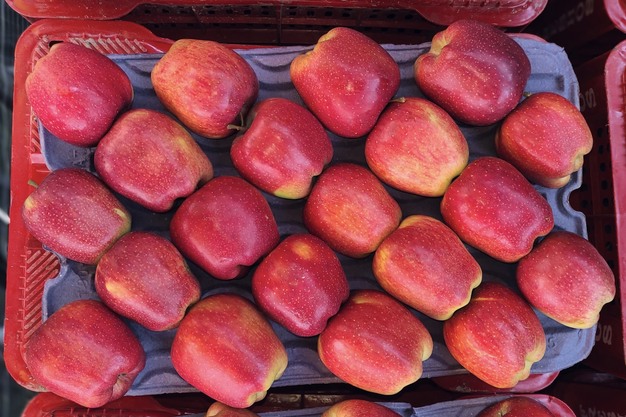
This year, prolonged weather challenges have increased the water content in apples from Kashmir and Himachal, which could potentially affect their shelf life and market response, Chaurasia shares. However, he adds that it remains to be seen how this higher moisture will influence quality once the apples go into Controlled Atmosphere storage, where ripening is slowed and freshness is maintained. On logistics, he notes, "Transporting apples to south India can cost nearly twice as much as to northern markets, adding around 300-400 rupees per 17-kg box, though the supply-chain remains uninterrupted at present."
 © Freshos Enterprise
Chaurasia concludes by emphasizing the growing role of technology in strengthening Kashmir's apple industry this season. "We have seen considerable development in machinery, including new cold storages, packing equipment, and grading lines featuring color sorting and defect detection. Machine-graded boxes can now meet quality comparable to Turkish imports. This level of technology adoption is something the market is demanding nowadays," he concludes.
For more information:
Anuj P Chaurasia
Freshos Enterprise
Tel: +91 89099 99961
Email: i[email protected]
www.freshos.co.in