The Brazilian Association of Fruit and Derivative Producers and Exporters (Abrafrutas) believes the Mercosur-European Union (EU) Agreement is closer to conclusion, though it remains cautious about the reduction of the additional 50% tariffs imposed by the United States.
According to Abrafrutas' technical and project manager, Jorge de Souza, the European scenario has evolved positively in recent months, while U.S. trade decisions remain uncertain and dependent on political conditions. He said there is a more favorable climate for advancing negotiations between Mercosur and the EU, as countries previously resistant to the agreement are showing more flexibility.
Souza noted that global trade tensions, particularly following U.S. protectionist measures, have led some European governments to reassess their positions. "Everyone realized that those who are aligned, from a strategic point of view, are better off uniting, because united they will be in a better position than if they remain separate. So, I think it is very likely that [the Mercosur-EU agreement] will be signed by the end of the year," he said during a webinar on Tuesday, the 4th.
However, optimism is lower regarding possible changes to U.S. tariffs. Despite renewed dialogue between the presidents of Brazil, Luiz Inácio Lula da Silva, and the U.S., Donald Trump, Souza described U.S. actions as "unpredictable." He noted that while there are signs of a potential review of restrictions, there is no clarity on when or which sectors might be affected.
"Trump is a 100% business person, and he's only looking at the business side. So, he realized that perhaps the level of restriction imposed was too much, that it could even affect the American economy, as it is affecting it. So, I believe he may back down somewhat, but we don't know how much or when. I even think that fruit farming is one of the sectors that could benefit, before other sectors of industry, yes," Souza stated.
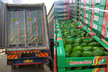
Current tariffs continue to limit exports of mangoes, grapes, melons, papayas, and ginger, all of which fall under Abrafrutas' scope. The measures have also delayed the expansion of the fruit trade with the U.S. Souza pointed to the stalled negotiations to open the U.S. market for Brazilian Tahiti limes and acid limes, which have been under discussion for more than two decades, and for avocados, whose technical qualification has been completed but awaits final approval.
"Solving this issue is not just about eliminating tariffs, it's about unlocking opportunities that have been stalled for decades, with the potential to generate millions of dollars in immediate exports," he said.
Source: Agro Estadão / Abrafrutas