It has been an altogether positive year for the pineapple trade, but not one without obstacles. This is what was reported by Gregorio Pagni, head of the historic family business Alimentari Ortofrutticoli ABC, as he takes stock of an evolving market between sustainability, logistics, and new global dynamics.
"So far, 2025 has been a good year in terms of prices. The average values have remained sustainable, allowing us to work in balance." A stability that, however, had to deal with irregular supplies and some slowdowns in Italian consumption. "Supply was slightly lower than demand, and this made trade more balanced, albeit with fluctuations due to seasonality and logistical delays."
 © Alimentari Ortofrutticoli ABC
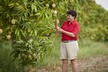
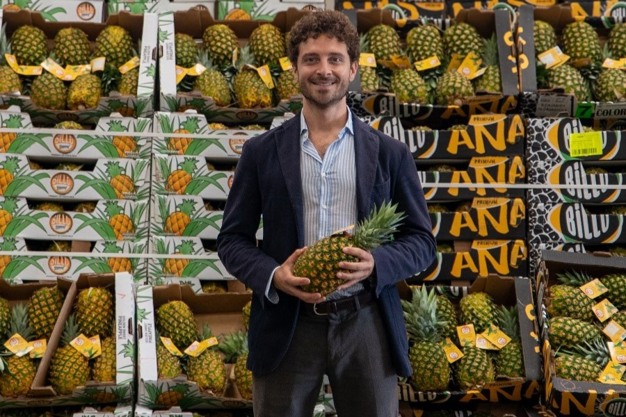
Gregorio Pagni
The market held up until the end of October, when shipping delays and a drop in consumption caused prices to fall within a matter of days. "The market dropped by €3-4 per package within 10 days. Now a complex month of November lies ahead," predicts Pagni, explaining that the sector is going through a transition phase in anticipation of the festive season. "I'm expecting a Christmas period with controlled volumes. The Christmas window is getting shorter and shorter, and we need to plan accordingly, focusing on loyal customers and continuity rather than margin."
The primary cause of the reduced availability is to be found in Costa Rica, the main origin of Italy. During the year, there was a "significant natural flowering", an agronomic phenomenon that is physiologically followed by a drop in production. The drop was "particularly steep" and was the main driver of the product shortage on the global market. A second critical element was the strong competitive pressure from other international markets. Countries with high spending capacity, such as the US, Russia, and some Middle Eastern markets, exerted sustained demand by paying "considerable prices". This dynamic diverted significant volumes that would otherwise have been destined for Europe, positioning it as a commercially less attractive destination.
Another important impact came from the juice sector. "The shortage of orange juice prompted many processors to turn to pineapple juice. Processors offered very high quotations for the raw material in Costa Rica, absorbing not only the riper - and therefore unsuitable for export - fruits, but also the smaller grades. This took additional volumes away, which helped support prices. Then there was the climatic factor, with heavy rains that limited both planting in 2024 and harvesting. "Today, volumes are returning to more regular levels, but management remains delicate."
Importing pineapples is becoming a complex job
"Being a pineapple importer is no longer easy: from a purely transactional function to complex risk management, it requires a constant monitoring of global macroeconomic indicators, the behaviour of competing markets, and climate-related production forecasts. It also requires solid relationships with producers," stresses Pagni.
 © Alimentari Ortofrutticoli ABC
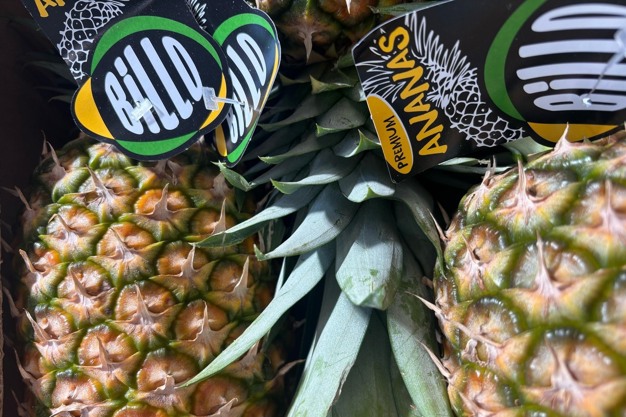
On the varietal front, MD2 remains the main type, although some operators are looking at African alternatives with curiosity. "We are just looking at them for now; we are not considering them for import yet," Pagni points out. Also relevant is the topic of the crownless product, which is mainly intended for the fresh-cut range and for processing. "These are more expensive pineapples, because they require higher quality standards and they weigh more. The United States is paying significant amounts, and this takes away additional volumes from Europe."
Looking to the future, Pagni calls for a broader and shared reflection on the economic sustainability of the entire pineapple supply chain, an issue that, in his view, can no longer be postponed. "The market must understand that it needs a sustainable supply chain," the operator emphasises, pointing out that the sector's resilience cannot be based on downward price logic. "Production, transport and management costs have risen steadily in recent years, while the value recognised for the final product often no longer reflects the complexity of the work behind it."
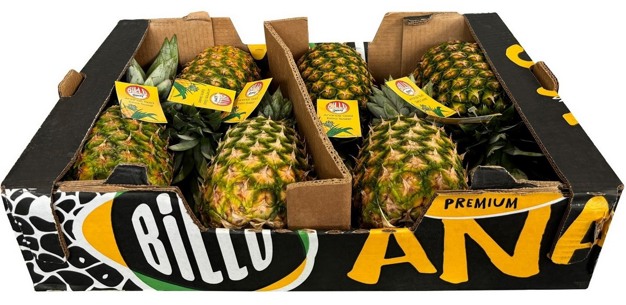
Pagni explains that the price of pineapples must reflect a greater awareness along the entire commercial chain, starting with the producers in the countries of origin and ending with European distribution. "We can no longer think of pineapples as an over-the-counter fruit sold at €0.99. It is an outdated model that no longer covers the real costs of production, nor those related to logistics, quality, and environmental sustainability."
According to the operator, a crucial point concerns the role of modern distribution, which is called upon to play an active role in recognising the value of the product and passing it on to consumers. "Retailers must adapt and accompany this transition, explaining why pineapples cost more and what it means to pay the right price for them. Behind every fruit, there are thousands of kilometres, strict checks, careful processing, and a fragile commercial balance that must be respected."
In this sense, sustainability is not only environmental, but also social and economic. "A high-quality product must be paid for what it is worth," concludes Pagni.
For more information: Alimentari Ortofrutticoli ABC Spa
Via Guido Reni 56
00196 Rome - Italy
[email protected]
[email protected]