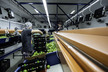
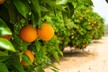
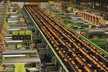
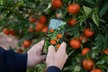
A group of graduate students from the Citrus Research Institute of Southwest University has drawn nationwide attention after selling 5,000 boxes of a newly developed hybrid citrus variety in just seven days.
The initiative began on October 15, when graduate student Li Shunxin and four classmates under researcher Cao Li formed a small "sales team" to promote "Sunshine No.2," a fifth-generation hybrid citrus developed by Cao after more than ten years of breeding work. Using social media platforms including WeChat, Xiaohongshu, and Douyin, their posts quickly went viral, attracting orders from across China.
"We really didn't expect this," said Cao, who has been developing hybrid citrus varieties for years. "I wanted my students to gain practical experience beyond the lab, to understand the market, interact with consumers, and learn how science connects to real life."
Li explained that the project began as a way to earn some living expenses and gain management experience. "Professor Cao always tells us that graduate students shouldn't just write papers; we should learn how to apply our strengths in real-world contexts," he said.
"Sunshine No.2" combines traits from mandarin, grapefruit, navel orange, and satsuma. Priced at 58.8 yuan (US$8.10) for 2.5 kilograms, the fruit sold at a slightly higher price than common tangerines but drew a strong consumer response for its flavor profile.
Cao's team previously developed "Golden Autumn Sugar Mandarin," China's first commercialized hybrid citrus, and "Sunshine No.1," a grapefruit-mandarin cross scheduled for market release in December. "Golden Autumn" is already distributed in major supermarkets across Chongqing. "Our citrus groves are carefully managed by experts and strictly follow green, pesticide-free standards," Cao said. "We don't use high-toxicity pesticides or ripening agents; everything is grown naturally."
Following media coverage, inquiries poured in about future availability. Cao, however, reminded his students that variety development requires long-term commitment. "Breeding a new variety takes at least ten years from the first fruit to full commercialization," he explained while inspecting trees at a test base in Jiangjin District. "Every variety has strengths and weaknesses. Some can be improved, others cannot. We must ensure stability and consistency before promotion."
The Jiangjin test base, operated with Chongqing Guilai Fruit Industry Co., Ltd., covers 20 hectares and produces about 250 tons of "Sunshine No.1." In comparison, "Sunshine No.2" was planted on only 1.3 hectares, resulting in limited volume.
"A hit product doesn't change the nature of science," Cao said. "As agricultural researchers, we must learn to be friends with time, testing our varieties across different regions, climates, and soil types to deliver the best results for farmers."
Cao added that sales will resume in late November when "Sunshine No.1" ripens. "We're thrilled by everyone's enthusiasm," he said, "but more importantly, we're learning how to connect research, innovation, and practice in a meaningful way."
Source: iChong qing