A new Life Cycle Assessment (LCA) conducted by Franklin Associates has found that reusable packaging containers (RPCs) used in North America's fresh grocery supply chains continue to show lower environmental impacts compared with single-use packaging.
The updated 2025 study, commissioned by IFCO and prepared by Franklin Associates, a division of Eastern Research Group (ERG), builds on earlier assessments from 2013 and 2017. The LCA was peer reviewed by Dr. Shelie Miller of the Center for Sustainable Systems at the University of Michigan's School for Environment and Sustainability. The analysis followed ISO 14040 and 14044 standards to ensure transparency and consistency.
 © IFCO
According to Franklin Associates, the assessment compared the environmental performance of reusable and single-use packaging across several impact categories, including water use, energy consumption, and greenhouse gas emissions. The results indicate that RPCs generally outperform single-use packaging across all measured areas.
Franklin Associates stated that the findings provide updated scientific data to guide packaging decisions within the fresh produce sector. "The 2025 North America LCA compared reusable packaging with single-use alternatives across key environmental categories," the report notes, highlighting the long-term resource savings associated with reusable systems.
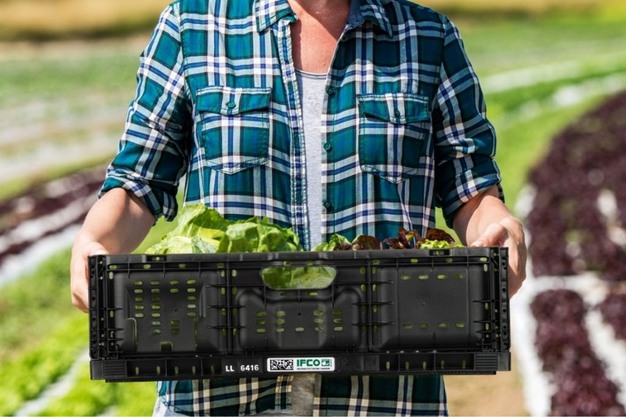
Commenting on the study, IFCO's Vice President of ESG and Strategic Marketing, Iñigo Canalejo, said: "Every avocado, every head of lettuce, every bunch of broccoli that travels in an IFCO RPC leaves a lighter footprint on the planet. This updated study proves again that when our customers choose IFCO reusable packaging containers, they're choosing measurable progress toward their sustainability and waste reduction goals."
Life Cycle Assessments are widely used to provide standardized comparisons between different product systems. Franklin Associates emphasized that comparative LCAs allow decision-makers to evaluate alternatives "based on science and facts."
In North America, RPCs operate within closed-loop systems that enable repeated use through collection, cleaning, and redistribution. The updated assessment concludes that this model reduces waste generation and resource consumption compared with single-use packaging systems in fresh produce logistics.
 © IFCOFor more information:
IFCO
Tel: +1 800 444 4274
Email: [email protected]
www.ifco.com