The harsh winter in São Joaquim, Santa Catarina, with temperatures below 7.2°C, has once again created favorable conditions for apple cultivation in one of Brazil's main producing areas. The municipality, located 1,360 meters above sea level, has become a national reference for apple production due to its cold climate.
According to the São Joaquim Department of Agriculture, the city accounts for around 34% of Brazil's apple production and 63% of Santa Catarina's total output. Data from the Agricultural Research and Rural Extension Company of Santa Catarina (Epagri) show that the 2024 harvest reached approximately 270,000 tons.
The planted area has expanded to 11,000 hectares, and Epagri projects that the 2025/26 harvest could reach about 370,000 tons, an increase of up to 30%. The agency attributes this expected rise to more favorable climatic conditions after several years of reduced yields.
Forecasts from the Center for Socioeconomics and Agricultural Planning of Epagri indicate that Santa Catarina's total apple production for the next season could reach 615,000 tons, representing a 28% increase from the previous year. Despite a slight 0.3% decline in cultivated area, average productivity is expected to grow by 28.4%, reaching 35,700 kilograms per hectare.
Nationally, Brazil's total apple production for the 2024/25 season was approximately 850,000 tons, up 2.16% from the previous cycle.
"This year we had more than 900 hours of cold weather, 300 hours more than in 2024. This allows the fruit to sprout well and, consequently, produce fruit, favoring the production process," said agricultural engineer and rural extension agent from Epagri, Marcelo Cruz de Liz.
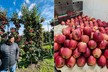
Cold weather conditions also help produce fruit with intense color, firmness, and sweetness. Grower Maurício José Montibeller, who cultivates Gala and Fuji apples along with clones such as Fuji Suprema and Fuji Michima, has been farming in the region for 40 years. "A family can survive with just a few hectares. I, for example, have six hectares planted," he said.
Source: Gazeta do Povo / Abrafrutas