By the end of this year, Peru's table grape exports will surpass $1.9 billion, cementing the country's status as the world's leading producer and exporter of table grapes.
The Ministry of Agrarian Development and Irrigation (Midagri) predicts that in 2025, exports will hit 760,000 tons and surpass $1.9 billion, with an average price of $3.27 per kilogram expected by December. This forecast considers the trends seen in the initial shipments of the 2024/2025 season.
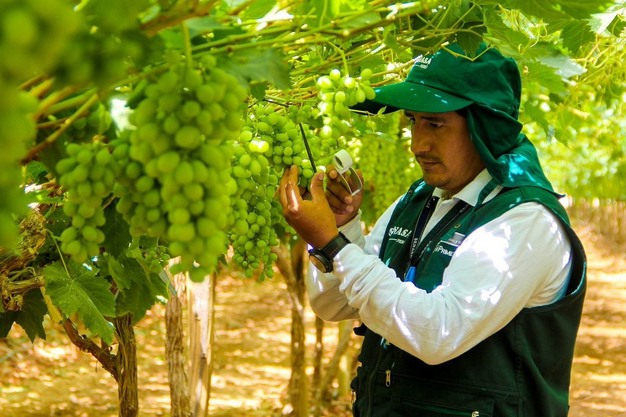 © Midagri Perú
From 2015 to 2025, Peru's domestic fresh grape production generally increased, rising from 597,900 tons in 2015 to an estimated 1.09 million tons in 2025, a cumulative growth of 82.5%.
Consequently, Peruvian grapes have established a strong presence in international markets due to their extensive varietal diversity, high quality, and exceptional ability to meet logistical and commercial needs. This success is also supported by Peru's free trade agreements with numerous countries and economic blocs.
Peru is now the world's top grape exporter, surpassing traditional rivals such as Chile. This leadership is supported by over 40 varieties, including Sweet Globe, Crimson Seedless, and Arra 15, which are popular in major markets such as the United States, China, Mexico, the United Kingdom, South Korea, and the European Union.
Similarly, Peru's leadership in fresh grape exports is maintained by the dominance of seedless varieties (75%), logistical efficiency, a strong commercial reputation, and adaptability. In addition, the sector works to expand access to more international markets.
One advantage is seasonality. Monthly fresh grape production exhibits distinct seasonal peaks, tied to the harvest periods in regions like Ica, Lima, Arequipa, and Ancash from January to April, and in Piura, Lambayeque, and La Libertad from October to December.
Peru faces stiff competition from major producers like Chile, South Africa, the United States, and China, all of which have advanced production systems. Nonetheless, Peru has managed to stand out by quickly adapting to changing varietal preferences and providing high-quality fruit during crucial seasonal demand periods, thereby strengthening its competitive edge.
The primary markets remain the United States (35%), the Netherlands (15%), Mexico (10%), China (8%), the United Kingdom (6%), and Canada (5%). However, there has been consistent growth toward Southeast Asia and the Middle East, creating opportunities to further diversify exports.
The new port of Chancay significantly boosts foreign trade by offering a direct route to Asia and accommodating larger vessels, reducing transit times and costs to China, Taiwan, Japan, and South Korea. It also enhances logistics efficiency and strengthens Peru's role as a top supplier in the southern hemisphere.
For more information:
Ministry of Agrarian Development and Irrigation (Midagri).
www.gob.pe