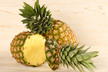
For good pineapples, Surinamese growers are becoming less dependent on supplies from Costa Rica or Brazil. Pineapple cultivation is expanding in the South American country. Amea is one of the companies that, with conviction and dedication, grows local varieties that are not only sweeter than the imported ones but also have more character. "Suriname does not always have to look abroad," says Wensley Perea. "We have more available here than we think, and we can also grow a lot more ourselves. We are working hard on that."
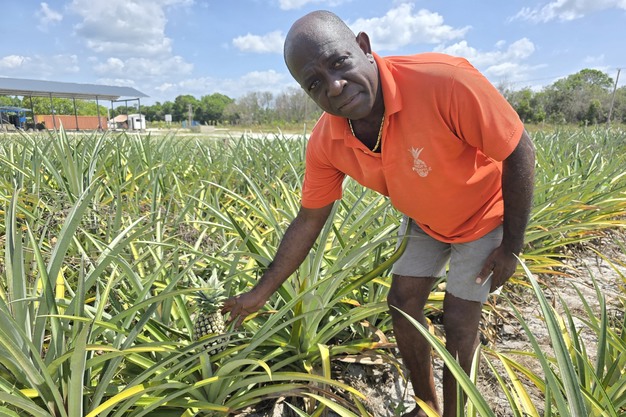 © Pieter Boekhout | FreshPlaza.com
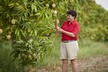
Wensley Perea: "We have more available here than we think, and we can also grow a lot more ourselves. We are working hard on that."
Wensley's journey began in 2001 with the cultivation of cashew nuts, a promising project until political and financial obstacles forced him to halt operations in 2006. But Wensley did not give up. Eight years ago, he started again, this time focusing on pineapple. "We were already growing pineapple as an intercrop with cashew, so the move was logical," he says.
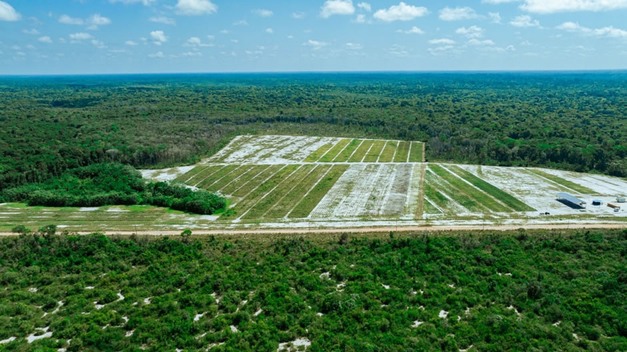 © Pieter Boekhout | FreshPlaza.comAerial view of the plantation in the jungle
Native pineapple varieties such as Stuger and Inginasi thrive exceptionally well in Surinamese soil. "By the way, the Guyanas are the cradle of the pineapple plant. The fruits here reach a high Brix value of 17 to 18 degrees. That simply means they are very sweet," Wensley explains. He adds that he also plans to start propagating a pink variety soon, something still rare in Suriname but very important for Amea.
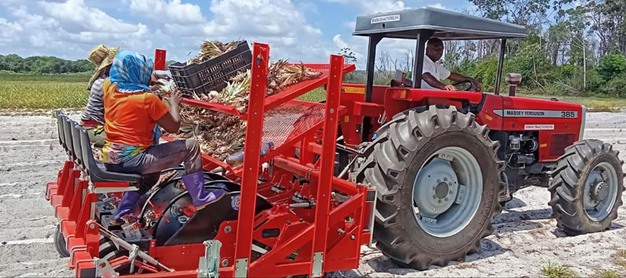 © Pieter Boekhout | FreshPlaza.comPineapple plants being planted
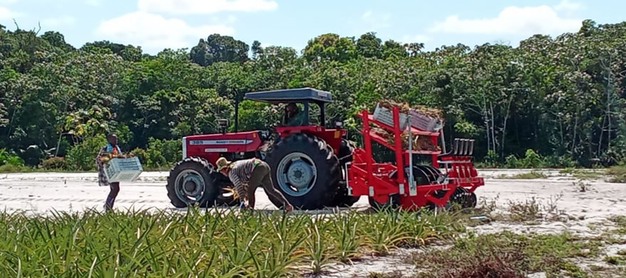
Wensley gained knowledge of modern pineapple cultivation in Brazil and Costa Rica through contacts with AgroFair, an international fresh produce company committed to FairTrade® and organic production. Yet the cultivation methods from Central America turned out not to be easily transferable. "I ended up developing my own system, tailored to our varieties, our climate, and our soil. We also recently started machine-planting our pineapples. This innovation is necessary to overcome the shortage of manpower and to realise our growth ambitions."
A pineapple plant takes about 18 months from cutting to fruit in Suriname. By staggering plantings, Amea achieves a year-round harvest and continuous sales on the local market. One hectare contains more than 50,000 plants. During dry, hot periods, sunburn can be a risk, but that does not deter Wensley. "We also have our own water source. Without it, irrigation would be unaffordable because tap water is far too expensive for large-scale cultivation."
 © Pieter Boekhout | FreshPlaza.com
For the Surinamese market
Amea now focuses mainly on the domestic market. "Suriname needs to import less and produce more itself. That is good for the economy and for self-confidence." Although the Surinamese product is often more expensive than imported pineapples, Wensley believes in his 'back to basics' vision. "People want authenticity, a return to products of the past. And maybe the government should help a bit, for instance by introducing higher import duties on imported fruit."
He notes that prices could well come down, at least with more efficient operations and more direct sales to supermarkets and end customers. "Small-scale brokering often drives prices up unnecessarily and limits the sector's growth." In the global market, Wensley currently sees few opportunities, as Costa Rica and Brazil dominate with masses of cheap pineapples. But within the CARICOM countries, there are many opportunities. "There, the price level is comparable to ours," he says.
"We certainly should not rule out exporting our pineapples to the Netherlands. Many people with Surinamese roots enjoy buying something that comes from Suriname, especially fruit and vegetables. Amea wants to build on that, especially through branding as an original Surinamese product." With 20 hectares, Amea is already a respectable pineapple grower in Suriname.
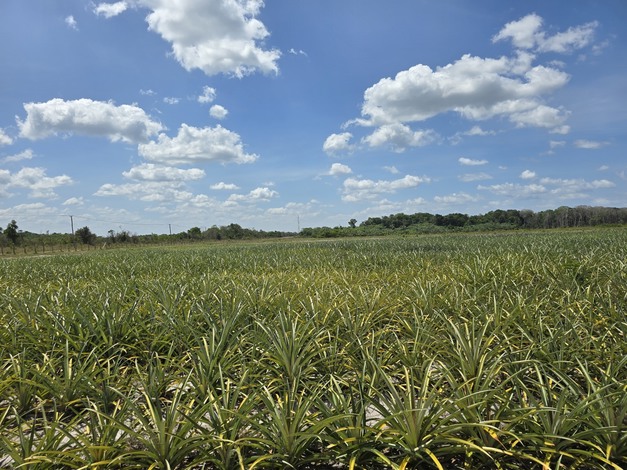 © Pieter Boekhout | FreshPlaza.com With 20 hectares, Amea is already a respectable pineapple grower in Suriname
Selling per kilo: Logical and fair
In Suriname, pineapples were traditionally sold per piece. Wensley changed that. "We sell by the kilo. That's fairer, you pay for what you get. At first, there was resistance, but with watermelon, people do it that way, too. Eventually, the entire Surinamese fresh produce sector will have to move in that direction." And that is not the only innovation he wants to introduce. "We want to sell not only fresh pineapples but also pineapple juice, jam, chunks for pizzas, and fruit salads. Soon we'll start producing our own dried pineapple and other fruits as well. That market still has to develop here in Suriname, but we want to be at the forefront."
Realisation of a pineapple processing plant
With 20 hectares, Amea is already a respectable pineapple grower in Suriname. Yet Wensley wants to bring all his ideas and plans to life in the coming years and expand to at least 150 hectares. "That would be very nice. We are now building a complete processing line for our pineapples: washing, waxing, juicing, drying, everything."
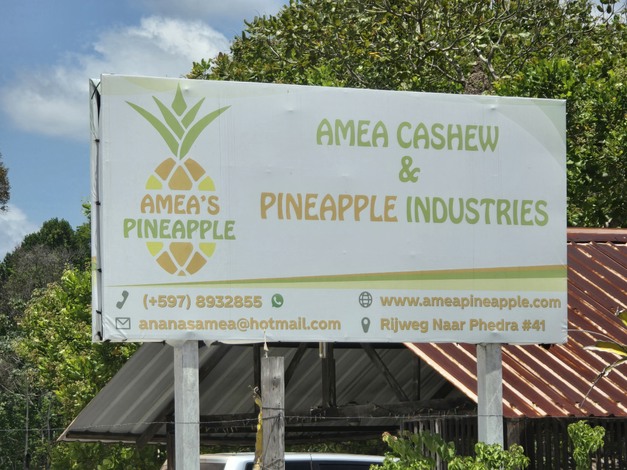 © Pieter Boekhout | FreshPlaza.com
The outlook is positive; there is still plenty of potential in pineapple and other fruit cultivation. "We are thinking about that too, but that's easier said than done. Suriname has everything it needs to be self-sufficient: fertile soil, sunshine, water, and space. But it often lacks skilled labour, and access to capital is very difficult. You don't easily get a million-dollar loan here, whereas in other countries that's quite normal for large-scale agricultural projects."
Another obstacle is the import duty on bringing in inputs such as fertilisers and machinery from abroad. "There are opportunities for exemption, but they do not automatically apply to everyone. That slows down growth and innovation. So there's still work to be done, but if the government and the sector come together, a lot is possible. More than we think," concludes Wensley.
For more information:
Wensley Perea
NV AMEA Cashew & Pineapple Industries
Rijweg naar Phedra #41
District of Para (Suriname)
Tel: +597 8932855
[email protected]