Recently, Fairtrade International announced an increase in the minimum prices of bananas, driven by cost increases for growers. Not only have wages and prices of inputs like fertilizers in producing countries gone up, but growers are also dealing with increased costs for security as well as climate change. "Heightened security is necessary to reduce contaminations with narcotics," says Silvia Campos, Senior Advisor, Bananas, at Fairtrade International.
Climate and changing weather patterns are putting a lot of pressure on production. "It is affecting bottom lines of the growers' businesses as growers need to make investments to prepare for climate change," said Campos. Since bananas are grown in humid areas, pests and fungal diseases like Black Sigatoka are more common. Growers need to make investments in agrochemicals to reduce spreading of the disease, resulting in additional expenses. If nothing is done, yields will go down, increasing the cost per box of bananas.
Pricing model for each growing country
The process of revising the minimum price started around March 2025 and was announced during Fruit Attraction in Madrid a few weeks ago. The price increase varies by producing country as the costs of growing bananas are not the same everywhere. "It is a long and comprehensive process as the variables are different in each growing country," shared Campos. In some countries, transportation costs are higher compared to others due to the distance between plantations and the port. "Fairtrade asks growers and exporters to collect and validate their costs and based on their input, the cost price is being calculated," she added.
The tools for calculating the price were developed by Fairtrade International. "It is our responsibility to provide the reference for each growing country as that is the basis for negotiating. We outline the details of the minimum price, but we also publish the average cost of wages, fertilizers, packaging material, etc. because it is proof of why prices need to increase," Campos commented. In addition to growers and exporters, representatives from local banana chambers are brought in. Since 2009, this has been an annual exercise and next year, calculations will start in February.
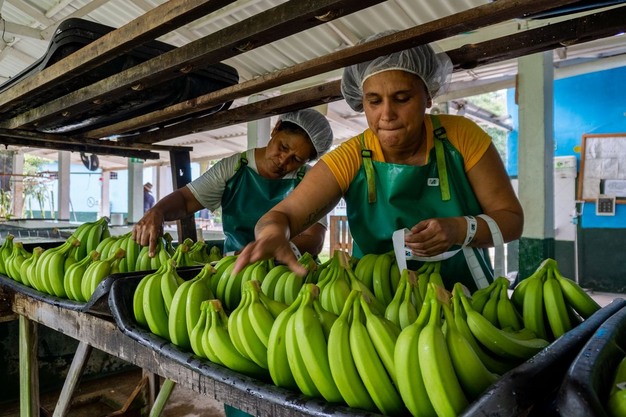 © Fairtrade International
Impact on consumption?
From the trade side, the price increase is not a big shock. "They were expecting it."
Campos doesn't expect consumption of bananas to be impacted. "Consumers have become used to very low banana prices, but even after this price increase, bananas will continue to be the cheapest fruit item in the store." Even households that are on a limited budget will continue to buy bananas because there is no cheaper fruit alternative. On top of a relatively low price, bananas are also very convenient. Consumers can transport them with or without protective cases, and children can peel them at school without help from their parents. Although Campos doesn't expect a big change, consumers could shift away from Fairtrade to conventional bananas as a result of the price increase.
However, she is hopeful the price of conventional bananas will also go up because costs have increased for those growers as well. These growers are also keen to have a reference price as that will help them move away from prices that are too low to recover the capital expense. "Our goal is to work with a reference price for all growers, whether Fairtrade certified or not."
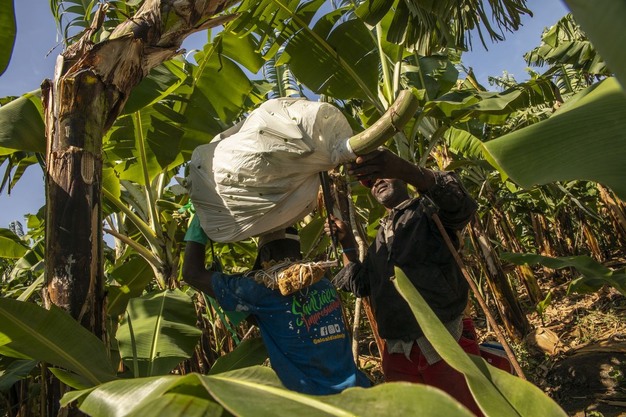 © Fairtrade International
Producer network Latin America and Africa
Fairtrade's producer networks in Latin America and the Caribbean (CLAC) as well as Africa represent growers from Latin America and Africa who grow for the fresh export market. In Latin America this includes growers in Peru, Ecuador, Colombia, Panama, Nicaragua, Mexico, and the Dominican Republic. In Africa, the Fairtrade producer network consists of growers from Ghana, Cameroon and Ivory Coast. These networks have experts and teams that work with Fairtrade International on collecting and validating data. In addition, they bring together growers and exporters in technical roundtables to discuss costs of production. Most countries grow bananas conventionally and organically, but some are more specialized than others. Peru is more focused on organic production while Cameroon has a larger conventional banana industry.
Campos closes by saying that if consumers want to continue eating bananas, plantations need to stay viable, and prices need to be fair. "It is our job to calculate what is a fair reference price for growers in Ecuador, Colombia, Peru, or Ghana. There is so much involved in growing a high-quality banana in a sustainable way, that fair pricing is the key to keeping businesses viable."
 For more information:
Silvia Campos
Fairtrade International
[email protected]
www.fairtrade.net