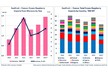
Apple prices in Kashmir's wholesale markets have shown a slight recovery in recent weeks, but traders say the oversupply of low-grade fruit continues to restrict stronger market improvement.
According to traders, large volumes of C-grade apples, including windfall fruit, dispatched from local mandis to outside wholesale markets have contributed to a price slump throughout much of the harvest season. "Fruit growers have no option but to send their C-grade produce to mandis," said Mushtaq Ahmad, an apple grower from Shopian district. "We don't have large juice plants here where the windfall could be processed," he added.
Growers and traders note that the influx of lower-quality apples, often damaged by weather or mishandling during harvest and packaging, floods the wholesale markets, pushing down prices even for higher-grade fruit. "Shipments of C-grade apples have been the main reason for the price crash," said Tariq Ahmad, an apple grower from Shopian. "Traders outside the Valley are reluctant to pay premium rates because the overall quality of consignments arriving from Kashmir has been inconsistent," he added.
Peer Shabir Ahmad, an apple grower from Shopian, said cultivators must focus on proper grading and packaging. "They must not mix A-grade apples with B and C-grade," he said. "This practice lowers the overall value of Kashmir apples in the national market and hurts our reputation," he added.
Traders also urged the government to facilitate investment in processing units, cold storage, and juice plants to help absorb surplus production and reduce dependence on outside mandis. "If we had adequate facilities to convert windfall or low-grade apples into juice or pulp, growers would not be forced to dump everything in the same market," said another trader. "It would stabilize prices and help in creating more jobs within the Valley," he added.
The trader further noted that market intervention schemes are essential to prevent damaged apples from reaching the fresh market and to maintain consistent price levels across the supply chain.
Source: Greater Kashmir