In the period leading up to the Mid-Autumn Festival and National Day holidays, wholesale fruit prices generally rose. However, prices have since fallen by about 10% compared to pre-holiday levels. Traders reported that both fruit prices and sales before the holidays were lower than in previous years. They attributed this to several factors: the overlap of the Mid-Autumn Festival and National Day holidays prompted many families to travel rather than stay home, reducing fruit consumption. Additionally, the current economic environment has dampened consumer spending, leading to slower retail sales. Some traders also noted that the inconsistent quality of certain fruit arrivals further affected overall sales performance.
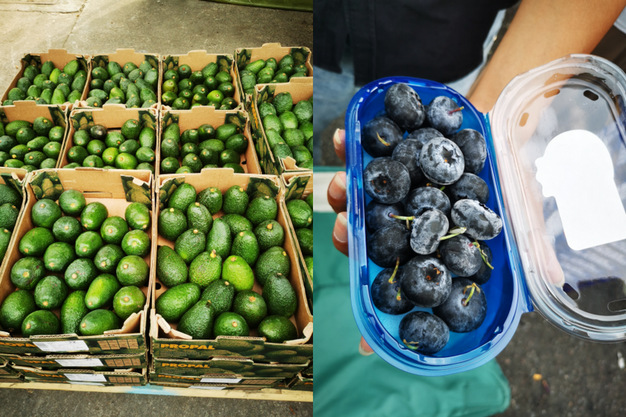
Left: Chilean avocados; Right: Yunnan blueberries from China
The new season of Chilean avocados has begun arriving in China. Due to limited supply, prices are slightly higher than last year but remain stable, currently selling at ¥165–¥170 (US$22.70–US$23.40) per box, around 10% higher than the same period in 2024. Traders noted that the overall quality has been good, with the first shipments showing particularly attractive appearance and texture, though some of the second batches were of slightly lower visual quality. Meanwhile, the supply of Yunnan-grown avocados is gradually increasing. Prices for the Hass variety currently range between ¥125 and ¥140 (US$17.20–US$19.25) per box. Although volumes are still limited, supplies are expected to grow significantly next month. Peruvian avocados now achieve year-round availability, but current volumes are small due to the transition between production seasons.
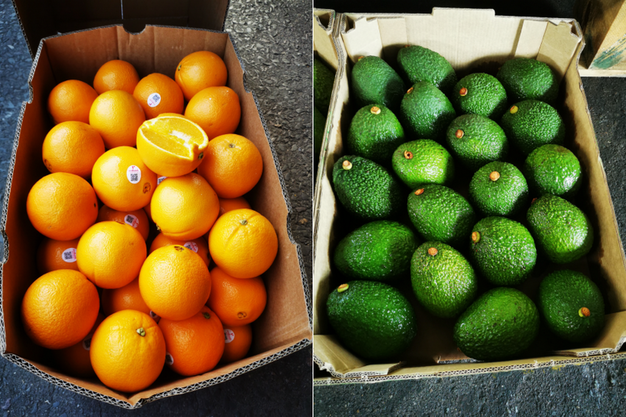
Left: Australian oranges; Right: Chinese avocados
According to fruit traders, Australian oranges performed relatively well before the holidays, though prices were lower than in previous years. Most batches sold for ¥280–¥290 (US$38.50–US$39.90) per box, down from the usual ¥300+ (US$41.25+) in past seasons. Prices have since declined to ¥250–¥260 (US$34.40–US$35.75) per box. South African oranges are comparatively cheaper, with higher-quality lots priced at around ¥160–¥170 (US$22–US$23.40) per box and lower-quality batches around ¥120 (US$16.50) per box. Traders attribute the overall decline in prices to large arrival volumes, uneven quality, and weak market demand. As domestically produced Chinese oranges gradually enter the market, imported orange sales are expected to come under further pressure.
Blueberry supply remains generally limited. Peruvian blueberries are currently priced at ¥120–¥150 (US$16.50–US$20.65) per box, while a small number of Yunnan blueberries with stems are also available. These typically range from 24mm+ to 28mm+ in diameter and sell for about ¥150 (US$20.65) per box.
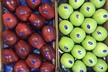
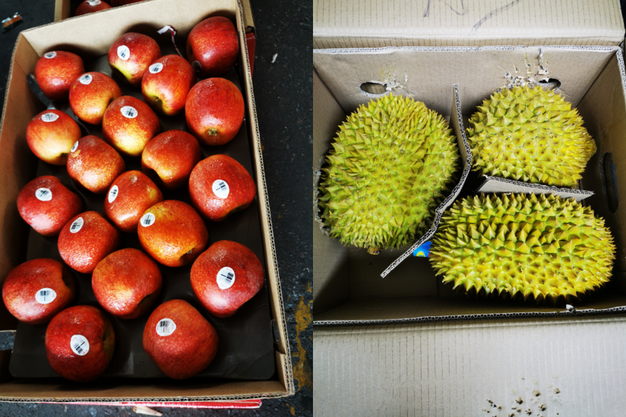 Left: imported apples; Right: Vietnamese Monthong durians
Vietnamese Monthong durian continues to dominate the imported durian market. Before the holidays, A3-size durians sold for around ¥450–¥480 (US$61.90–US$66.10) per box, compared to over ¥500 (US$68.65) last year. Prices have since fallen to around ¥400 (US$54.90) per box. Some traders reported that durian sales during the long holiday period were below expectations, mainly due to inconsistent quality in arriving shipments.
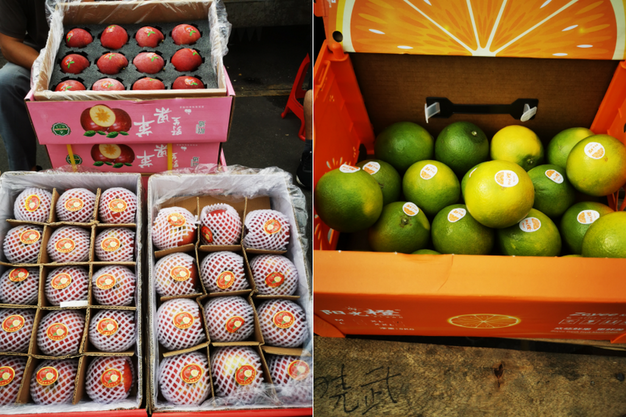
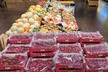
New season Chinese apples and oranges
China is currently harvesting a wide range of new-season apples and oranges, which are among the most popular fruits during the Mid-Autumn Festival, alongside Xinjiang crabapples, Qiuyue pears, and Fuyu persimmons. Apple traders noted that the supply of premium first-grade apples is limited, driving up procurement costs. However, overall market prices have risen only slightly, as traders remain cautious about price adjustments, fearing that higher prices could further dampen sales.