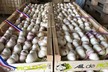
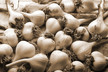
Spain's garlic and onion sector is going through a critical moment. Although the season has so far been productive in terms of volume and quality, the export capacity and profitability of national producers have been threatened by high production and logistics costs, together with pressure from international competition.
According to the latest figures from the National Garlic Board, the area planted with garlic this season will reach 23,956 hectares, 5% more than in the previous campaign. As for onions, 24,946 hectares have been cultivated in the latest campaign, which represents a 7.1% increase compared to the previous year.
The CEO of Grupo Lomar, José López de la Fuente, says that production remains at acceptable levels, but warns that the economic situation is a cause for concern. "The crop is doing well, but the market is punishing us. Purple garlic is coming in smaller sizes, while violet and white garlic remain stable. As for late onions, prospects are good, although the high costs are making us less competitive."
The manager says that the main handicap lies in the costs of production, transport, and access to irrigation water, which are much higher than in other producing countries. To this, we must add the EU's demanding environmental and health regulations, which are making local production more expensive.
The entry of foreign products at low prices is eroding the position of Spanish garlic and onions both in the domestic market and abroad. In the case of garlic, China and Argentina are keeping a strong presence in the European Union, while Egypt is consolidating its position as a relevant new competitor.
"High prices are making us less competitive on a global level and export sales have considerably dropped as a result," says López de la Fuente. "Spain has a quality product, but it is becoming increasingly difficult to sell it abroad."
Faced with such circumstances, technological innovation is emerging as a key tool to improve the sector's competitiveness.
"The future of garlic and onion will depend on our ability to reinvent ourselves without losing our essence. We must invest in innovation and highlight our identity as local producers," says López de la Fuente.
Source: diariosigloxxi.com