Côme Lapierre, general secretary of the Association of French Blueberry Producers (APMF), reports on the current blueberry season and the sector's plans for the future.
French production could reach a record 3,300 tons
2025 looks set to be a good year for French blueberry growers, with both volumes and quality. Last year was marked by very unfavorable weather in spring and rainy summer, but this year, French production should reach a record 3,300 tons, according to APMF estimates. In 2025, very few orchards were affected by the spring frost, and the new areas planted in recent years are coming into production with increasing volumes.
Blueberry volume forecasts for France 2025 by region (source APMF):
- New Aquitaine + Occitanie + Provence Alpes- Côte d'Azur: 2,100 tons
- Pays de Loire + Centre Val de Loire + Brittany + Normandy: 850 tons
- Grand Est + Rhône Alpes + Bourgogne/Franche Comté + Hauts de France: 300 tons
"It is important to modernize French orchards"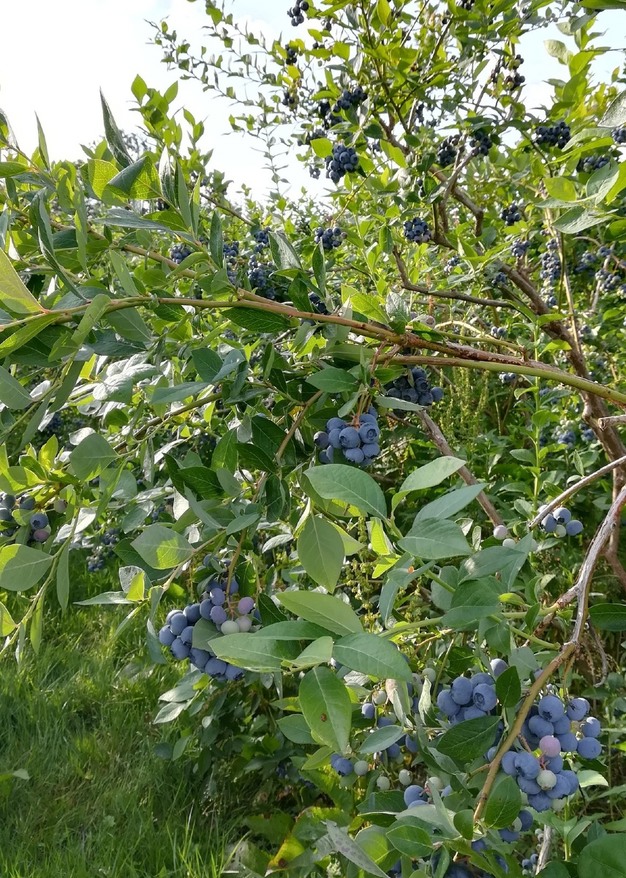 © APMF
French blueberry acreage has grown steadily by around 50 hectares every year for the past 3 years, now standing at 600 hectares. These new orchards are characterized by a significant renewal of varieties. The new varieties make it possible to supply the market with larger, firmer blueberries, and to provide volumes of French origin over a longer period. Many growers in the southwest of France have planted Rabbiteye varieties, which flower later in the season and are harvested from mid-August to October. "New varieties are being planted in France that are positioned later or earlier in the season, thanks to the genetic progress made in the blueberry sector over the last decade. It was therefore important for French orchards to modernize in response to these advances. The problem in France is that we mainly produce what is known as High Chill varieties, which need many hours of cold (varieties that are mainly found in the north of the United States), as opposed to Low Chill varieties, which need fewer hours of cold and are very common in the south of the United States and Morocco, for example. The most important hybridization work in recent years has focused on Low Chill varieties, resulting in very high-performance varieties with greater profitability (high yields, easier picking)," explains Côme Lapierre.
Moving away from the 125g format to boost consumption?
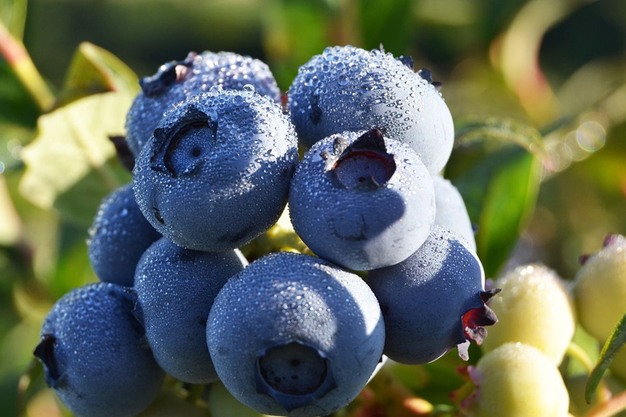
Despite the rise in consumption, France is still far behind the biggest blueberry consumers, found across the English Channel. "Recent figures show that per capita consumption in France will continue to rise, to 170-200g per capita in 2025. This is good progress, but we are still a long way behind the UK, which has 2kg per capita. The prospects for the French market are very good. The only problem in France, according to Côme Lapierre, is the lack of structure in the sector. "Until now, we have been concentrating on production, but we now need to work on structuring the market." As Côme Lapierre points out, blueberries are an impulse purchase, not a planned purchase. "Even though most distributors are now promoting Made in France produce, blueberries are still often poorly displayed on the shelves. There is a lot of work to be done between producers and distributors to promote the product." Another area that needs work is the packaging format. "French supermarkets are still very much locked into the 125g model, which is a major constraint on volumes. If marketed in bulk, volumes could be multiplied by 10, as demonstrated by the Grand Frais chain. This is another area where the English Interprofession has intervened, completely changing the display in stores, with cold units dedicated to red fruits, for example."
 © APMF
A market that is resisting the arrival of large volumes
Despite a somewhat crowded market due to a larger harvest and the usual peak in production at this time of year, the market is holding up well. "The situation is not worse than usual. Late June/early July is always a pivotal time, as larger volumes arrive from the northern and southern basins at the same time. But the market is performing rather well given these extra volumes." Prices are decreasing this week, "but we see a very slight increase in average selling prices overall, which should keep pace with inflation."
The first French blueberry harvests began in mid-May in sheltered orchards of the Nouvelle Aquitaine region (France's leading production area, representing 60% of national production). Harvesting in open-air orchards began in early June, also in the southwest. Large volumes of blueberries will be harvested in the plains from June to mid-July. Producers in mountainous areas (Limousin) will pick later in July, until the end of August. In the Pays de Loire and Brittany Centre/Val de Loire regions (2nd largest production area in France), harvesting began in the second half of June. For the Grand Est and Rhône Alpe regions, harvesting was scheduled to start at the end of June/beginning of July and will continue until the end of August, depending on the varieties and the altitude of the orchards.
For more information:
Association des Producteurs de Myrtilles de France
[email protected]
www.myrtilles.com