



Murcia's melon and watermelon season is in full swing. The cold spring caused the season to start a little later, but the rainfall ultimately worked out well. It seems the weather, prices, demand, and quality are and will continue to be favorable.
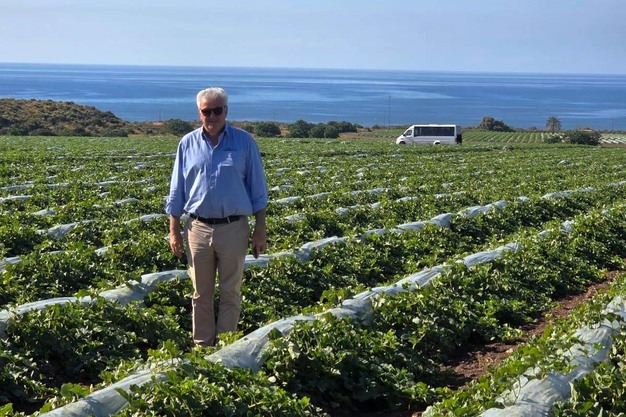
A key point in sales is the preference for certain sizes, as it can have a major impact on what can and cannot be traded. "A breakthrough we've had is that we've managed to sell a wider range of melon sizes to Germany. In the past, they only wanted size 8 and, occasionally, size 10. Now, they accept sizes 6 and 7. This improves our sales possibilities," stated Andrés Legaz, manager of Almerca.
 © Almerca
"We have given away up to 600,000 kg of melons, but it's not about weight; the important thing is that we can now sell more sizes. That means we can sell more units. This is the result of a lot of dialogue and effort with supermarket chains," Legaz said.
Green melon is gaining ground in Europe
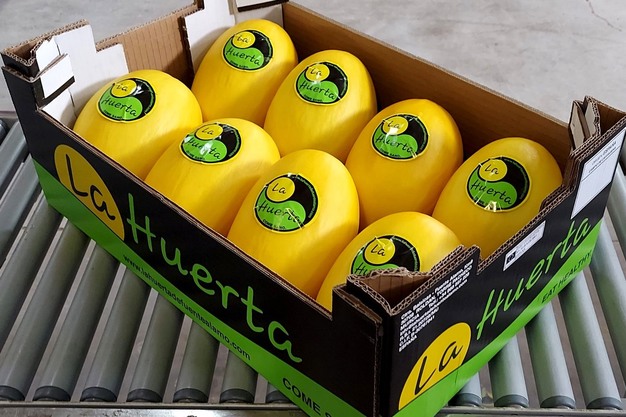
"The German market prefers yellow melon, but there are 4 to 6 weeks in summer when green melon is also in demand. Before, this melon was only for the Spanish market. We then actively started to introduce this product by supplying boxes with a mix of products. For example, sending two or three green ones in a box of eight melons. That's how we slowly built up demand in Europe," he said.
"Many people thought green melons were unripe yellow melons, just like peppers, which are green before turning red. Now they know that it's another type of melon," Legaz said.
"When they taste, they discover that it's deliciously crunchy. It also has a firm skin and is more resistant to damage. Yellow melon quickly gets a brown spot on its skin due to moisture, even if its flesh is still fine."
Watermelon remains the undisputed favorite
"Seedless watermelon is experiencing the biggest growth in consumption, even though we think the variety with seeds has more flavor. If it's hot in Europe, demand is enormous," Legaz said. Not only does it have a more attractive price than melon, it's also a very healthy and refreshing product."
"The harvest now coincides with that in Italy and Albania. We need to lower transport costs as soon as possible with the Mediterranean Corridor to be more competitive," he added.
"Prices are similar to last season. Last year, orders increased and then decreased. We're seeing the same pattern this year. Right now, orders are peaking."
 © Almerca
In winter, Almerca auctions artichokes, broccoli, broad beans, and courgettes. In Summer, "we focus on exporting melons and watermelons since the season starts in Almeria at the end of April until it ends in La Mancha in mid-September," Legaz said.
"We export about 23 million kilos in total. Yellow melon accounts for half the volume. We are also trying to bring Galia and Cantaloupe back into the spotlight. We work exclusively with Spanish products," he stressed.
"Green melon remains mainly intended for the domestic market. The rest goes to supermarkets in Germany, France, the United Kingdom, Belgium, the Netherlands, and Scandinavian countries. We are happy that the demand for green melon is increasing, because people increasingly appreciate its taste and shelf life," he stated.
For more information:
Andrés Legaz
Manager
Almerca
Tel: +34 676 474 948
Email: [email protected]
www.alhondigaymercados.com


