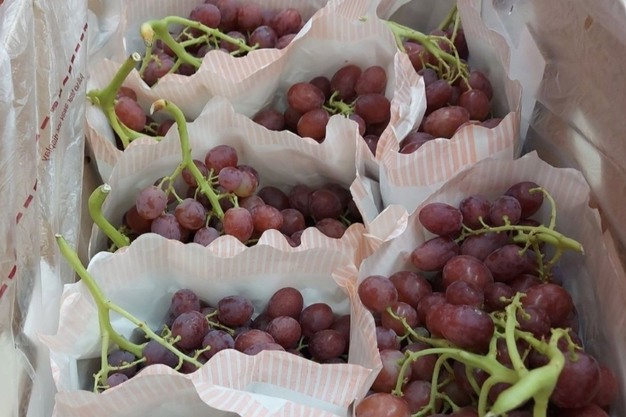
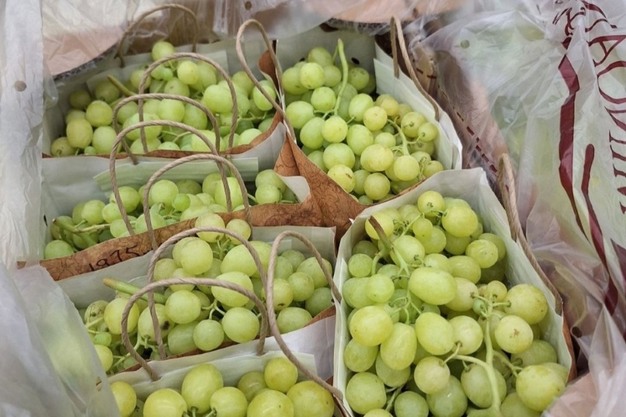
As the start of the Greek grape season approaches, the fruit is developing well in the farms of Crete. Mr. Nikos Giannidakis, owner of Minoan Fruits, describes the current situation: "We are seeing healthy grapes. There is no humidity and no downy mildew. Cretan production across all varieties will be up by 30% compared to last year. Especially in the case of Sultanina (Thompson Seedless), which accounts for 50% of Crete's production, thinning has been done very well, meaning that we are expecting a very attractive product. In addition, the rainfall that occurred in early May proved to be extremely beneficial given the generally dry conditions, helping us save two to three irrigations."
 © Minoan Fruits
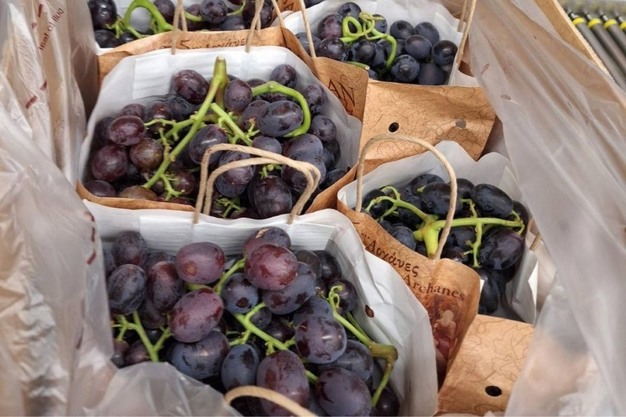
Regarding the production schedule, Mr. Giannidakis estimates that it will follow last year's timeline. As he explains: "That means that some early varieties grown in greenhouses will start around June 15, and the first open-field Prime grapes will reach the market around June 20–25. Early grapes represent about 30% of Crete's total production. As for the rest, unless there is a weather disruption, Sultanina will be available from the end of July, while the harvest of other late varieties, which make up 20% of Cretan grapes, will begin in the last ten days of August."
The Greek entrepreneur points out that the timely arrival of Cretan grapes on the market is crucial: "The main competitor for Cretan grapes is Egypt. Last year, the first fifteen days were difficult, as we hit the period when Egypt was clearing out its stocks. However, this year we see that Egypt started about ten days earlier than usual, so we hope not to run into the same issue."
 © Minoan Fruits
Furthermore, Mr. Giannidakis notes that grape growing in Crete is increasingly concentrated in fewer hands: "Older growers are retiring, and there aren't enough young people to take over their land, as the financial requirements are high. At this rate, I believe that in five years, Cretan table grape farms will be in the hands of only a few hundred producers, who will operate as larger businesses."
This shift is also expected to influence the pace of introducing new contract farming varieties. Mr. Giannidakis explains: "There will be greater financial capacity to test new contract varieties. We must not forget that grapevines produce their first fruit three years after planting. So, if the trial fails, you get nothing and must start all over again. In Crete, several such new varieties are currently being tested, but every year some problems arise. Moreover, Crete has many cultivation zones with unique microclimates, so you can't be sure that a variety that performs well in one area will do the same elsewhere."
 © Minoan Fruits
Minoan Fruits is closely following market trends and adapting accordingly. "We are in the process of establishing a producers' group with several dozen members. This can give us all the strength we need to meet the challenges of contract farming with new varieties. We are particularly interested in mid-early and late varieties that have so far shown promising results in Crete," the Greek entrepreneur concludes.
For more information:
Nikos Giannidakis
Minoan Fruits
Tel: +30 2810 233685
Email: [email protected]
https://www.minoanfruits.gr/