As Kenyan farmers seek alternative crops for higher earnings, Dr. Muriithi Matu has introduced yacon, a rare tuber, on his farm in Maston village along the slopes of Mount Kenya. Since starting in 2021, he has focused on its nutritional and commercial potential, making it one of Kenya's emerging crops.
Originally grown in South America, yacon is gaining popularity due to its health benefits and economic viability. Rich in vitamins C and B-complex, as well as minerals like potassium, calcium, and magnesium, the tuber is valued for its ability to regulate blood sugar levels and aid in weight management. Yacon leaves are also edible and have medicinal properties, making the crop attractive to health-conscious consumers.
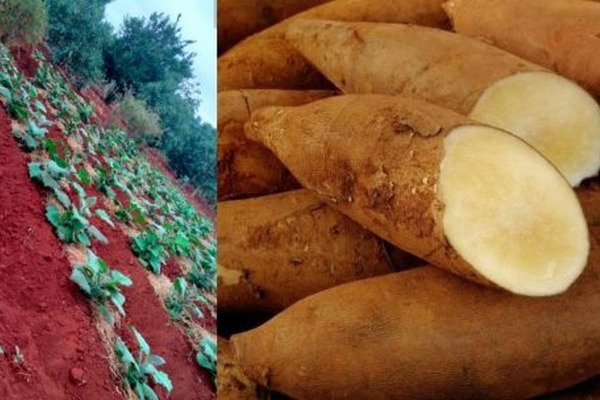
Despite its benefits, yacon farming requires careful management, particularly against pests and diseases such as aphids, cutworms, whiteflies, root rot, and powdery mildew. The tubers, which can grow up to four kilograms each, take about seven months to mature. A well-managed acre can yield up to 24 tonnes, positioning yacon as a lucrative option for farmers.
Muriithi notes that land preparation must be done cautiously, as plowing can damage the tubers. Instead, mulching is encouraged to retain moisture and suppress weeds. The crop thrives when planted at the start of the rainy season, requiring consistent moisture, particularly during tuber formation. In areas with erratic rainfall, irrigation may be needed, but overwatering should be avoided to prevent root rot.
For optimal growth, organic fertilizers such as compost or well-rotted manure are recommended. Farmers may also use a balanced fertilizer containing nitrogen, phosphorus, and potassium, though excessive nitrogen can lead to more leaf growth at the expense of tubers.
Yacon reaches maturity in six to seven months, with yellowing leaves signaling readiness for harvest. The tubers are in demand both locally and internationally, particularly in Europe, North America, and Asia, where exotic and functional foods are gaining popularity. Farmers can sell them fresh or process them into high-value products such as yacon syrup and powder.
In Kenya, yacon fetches more than $3.80 per kilogram, depending on market conditions. The tuber can be eaten raw, used to make juice, or processed for commercial beverage production. Muriithi advises consuming it fresh after peeling, much like a potato, to enjoy its full health benefits.
With its rising popularity, multiple uses, and strong market demand, yacon presents a promising opportunity for Kenyan farmers looking to diversify their agricultural ventures.
Source: Bizna Kenya