The fruit, durian, has long been a cherished part of local cultures in Southeast Asia, where it is grown in abundance. Before he started a company 15 years ago selling the world's smelliest fruit, Eric Chan had a well-paying job writing code for satellites and robots. And when Chan began his startup in his native Malaysia, durians were cheap and often sold from the back of trucks.
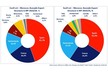
Then China acquired a taste for durian in a very big way. Last year, the value of durian exports from Southeast Asia to China was $6.7 billion, a twelvefold increase from $550 million in 2017. China buys virtually all durians exported globally, according to United Nations data. The biggest exporting country by far is Thailand; Malaysia and Vietnam are the other top sellers.
Today, businesses are expanding rapidly -- one Thai company is planning an initial public offering this year -- and some durian farmers have become millionaires. Chan is one of them. Seven years ago, he sold a controlling share of his company, which specializes in producing durian paste for cookies, ice cream and even pizza, for the equivalent of $4.5 million, nearly 50 times his initial investment.
The surge in durian exports is a measure of the power of Chinese consumers in the global economy, even though, by other measures, the mainland economy is struggling. When an increasingly wealthy country of 1.4 billion people gets a taste for something, entire regions of Asia are reshaped to meet the demand.
Source: economictimes.indiatimes.com