The Kazakhstan government recently deliberated on establishing new vegetable storage facilities and off-season reserves.
The stabilisation of prices for essential food products is now transitioning under the manual control of regional akimats. November will be a decisive month in shaping the annual food inflation level. Deputy Prime Minister Serik Zhumanarin initiated the meeting with this task.
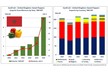
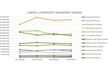
Seasonal reductions in vegetable prices include potatoes (-1.7%), onions (-1.2%), cabbage (-1.3%), and carrots (-1%). Deputy Minister of Agriculture Azat Sultanov presented the progress on the comprehensive plan for constructing vegetable storage facilities from 2023 to 2025. Kazakhstan currently boasts 901 storage facilities with a total capacity of 1.8 million tons, distributed among 257 potato storage facilities (499.7 thousand tons), 580 vegetable storage facilities (1.1 million tons), and 64 fruit storage facilities (136.9 thousand tons).
As per the comprehensive plan, 92 storage facilities with a combined capacity of 689.9 thousand tons are slated for construction, aiming to increase the total storage capacity to 2.4 million tons by 2025. Sultanov emphasized the importance of considering population needs and the productive regions, including Karaganda, Pavlodar, Zhambyl, and SKO, ensuring food security for major cities.
The plan outlines the introduction of 272 thousand tons of storage capacity in 2023, 206 thousand tons in 2024, and 160 thousand tons in 2025.
The construction aligns with irrigation, expanded cultivation, and irrigated land projects. Funding will be allocated to irrigation projects, crucial for cultivating crops to secure the country's food needs, highlighted Deputy Prime Minister Serik Zhumanarin.
source: primeminister.kz