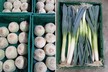
"The first deliveries of the new domestic harvest of organic onions took place at the end of week 27. At the moment, the demand is mainly covered by goods from the Netherlands", Josephine Hardt informs us. She is the managing director of Bio Kartoffel Erzeuger e.V. "The plantings were delayed all over Germany due to the wet and cold conditions. The soils were not passable for a long time, so there were delays in crop development of up to ten days in some cases."
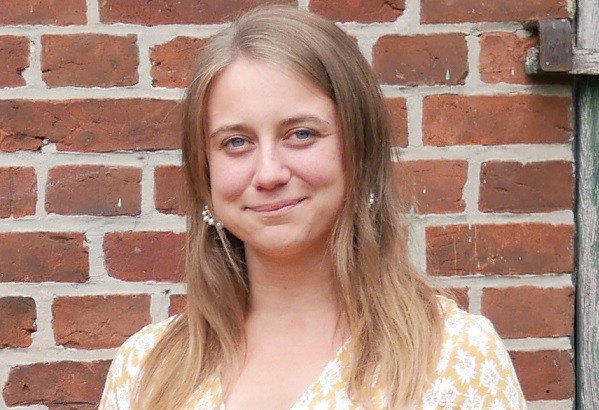 Josephine Hardt (Photo: Bio Kartoffel Erzeuger e.V.)
Steady professionalisation of organic onion cultivation
"After the rainy weeks in March and April, a long dry period followed in most regions, which caused problems for the crops. In this case, however, farms using sprinkler systems clearly benefited, including a large part of the organic onion areas. However, the current situation is very heterogeneous throughout Germany: on the one hand, there are farms with good crops, on the other hand, there are regions that are struggling with the weather conditions. Record yields are not expected this year. The clearing dates will also be delayed."
The drought led to a lower harvest of conventional onions in 2022. However, thanks to mostly irrigated areas, organic onions were less affected, he said. "In addition, we have been observing an expansion of organic cultivation areas for years, including last year. Nationwide, the area is 1,560 hectares, which corresponds to about ten percent of the total cultivated area for onions." Furthermore, many retail chains were able to obtain German goods at a good quality until into May, before subsequently turning to Dutch goods.
Constant price level in the past years
The record peaks, exceptional situations and turbulence regarding prices in the conventional sector had not been reflected in the organic market. "In the past years we found a constant price level for organic onions. The extreme price developments from the conventional sector have not been seen in the organic market."
Two thirds of the marketed volume are yellow onions, while one third consists of red. White and vegetable onions are only sold in very small quantities. Organic onions are almost exclusively marketed as edible onions. "Since 2019, there has also been an expansion in the cultivation of red organic onions because corresponding impulses came from the trade at that time. For example, the conventional item was discontinued in favour of the organic variety, which pushed the cultivation of red onions at that time."
Higher sales in the last few months
"It was clear to everyone that the record sales of the pandemic years could not be continued so easily," Hardt knows. "Nevertheless, there is a strong perception in the market that the organic sector is experiencing positive sales impulses again after the sales dip of the past months. In the last few months, we have seen some increases in organic onions, which is partly due to the fact that prices in the conventional market have exploded so much and consumer prices in the conventional as well as in the organic sector have converged very strongly. So some of the sales have been in favour of organic."
For the future, he said, it is therefore crucial to analyse how the market will develop in the long term. "The goal for our farmers is to think production and sales hand in hand and to develop the structures accordingly. Organic onions should only ever be grown with secure marketing. However, we also know that the capacities for long-term storage are not yet available across the board. There is definitely still potential to be tapped."
Over 80 percent in food retailing
Compared to some other organic products, over 80 percent of organic onions find their sales in conventional food retail, with discounters counting as the strongest sales channel. "In recent months, there have also been large increases in sales," says Hardt. "Domestic goods were able to flow off well before then gradually switching to import volumes." According to Hardt, in 2021 imports accounted for 42 percent, with the main countries of origin being the Netherlands and Egypt.
Resilience of organic farming
Looking at the consequences caused by climate change, Hardt is convinced that organic farming is part of the solution and the only sustainable answer so far to the challenges posed by climate change. "Our production is completely free of synthetic chemical pesticides. We produce with nature and have the entire cycle in mind. Of course, this is also reflected in the production, so that the cultivation is also more resistant in certain years, which was just noticeable in 2022. Organic farmers have constantly innovated and developed their farms in recent years and ensured that sustainable and resilient cultivation methods, oriented towards the environment, can guarantee the supply of good organic products."
Further information: Josephine Hardt
Bio Kartoffel Erzeuger e. V.
Schwarzer Weg 3
D-29462 Güstritz, Germany
Tel: +49 5843 99090 10
[email protected]
https://bke-verein.de