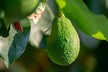
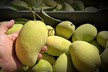
Oleic acid (monounsaturated fatty acid) accounts for 40% to 45% of the total fatty acids in the avocado's mesocarp or pulp, which concentrates the greatest amount of all the fruit's lipids, i.e. about 70%. The avocado seed's lipids account for less than 30% of the fruit's lipids and the main one is linoleic acid.
Even though the seed does not have as many lipids, there is a direct relationship between its size and the fatty acid content in the pulp, as was proved by tests conducted in the late 1970s. Fruits with larger seeds have a higher oil content. Subsequently, research carried out at the Center for Post-harvest Study (CEPOC) of the University of Chile in the 1990s validated this relationship, as the fruits with the biggest seeds had higher contents of oil in their pulp in 80% of the avocado orchards that were studied.
But that isn't the only factor that determines the accumulation of oleic acid in avocados. Different countries, such as Australia and New Zealand, have long been studying the effect of a given climate zone on the accumulation of oil and dry matter, as well as the relationship between these two variables.
Researchers in Chile carried out a study using 6 adult avocado orchards (which were 7 or more years old) in the localities of the Coquimbo Region, Valparaíso, O´Higgins to determine if there were variations between avocado-producing areas in Chile. In each orchard, they chose and marked four healthy trees with similar fruit loads.
On each sampling date, they took four samples per orchard. Samples were taken from the beginning of June to the end of January. The samples were taken to the laboratory at the Faculty of Agronomic Sciences of the University of Chile where they were used to generate a sample made up of four fruits for each tree and sampling date.
The work carried out by Dr. Bruno Defilippi and INIA collaborators showed that the accumulation of lipids in the avocado pulp is strongly dependent on temperatures: The accumulation of dry matter did not follow the same pattern in an orchard located in the coastal area as in an orchard located in the inland valley.
In fact, the fruit from the inland valley had 23% dry matter 55 days before the fruit from the coast, where there is a lower temperature. This last detail is very important because, based on the temperatures, measured as degree days, producers could know on what date the avocado, from a certain area, would reach 10% of oil or have a 23% of dry matter.
Source: redagricola.com