In Colombia, producer and exporter of Hass avocados, Cartama, is not only growing fruit, but also "a sustainable present and future," said its founder and general manager Ricardo Uribe.
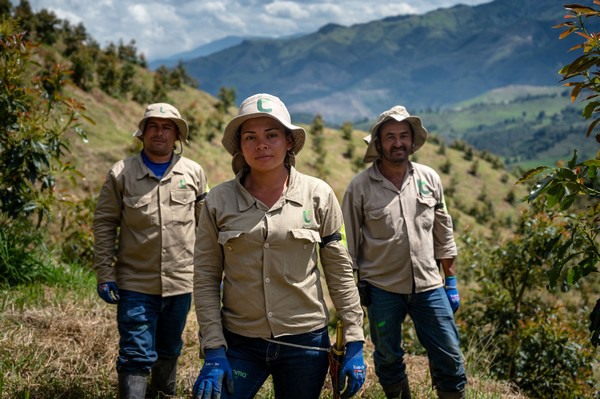
"Cartama was founded in 2000. Colombia is a large producer of green avocados, but until then, Hass avocados hadn't been grown in the country. My father Luis Carlos Uribe learned about Hass avocados on one of his trips to Chile and returned to Colombia convinced that our country had the potential to develop the Hass industry. Our family business, which had been devoted to floriculture for 40 years, decided to venture into and test its cultivation on a 12-hectare plot in a municipality in the department of Antioquia, where we were growing and learning how to manage the fruit for 12 years."
"In Colombia there were no plantations or knowledge about its cultivation. We were pioneers with Hass avocados in the country," says Ricardo. "Since then, we have managed to reach 6,500 hectares in production in 17 municipalities of 3 Colombian departments: Antioquia, Caldas and Risaralda, and we generate close to 2,000 direct jobs and 800 indirect jobs. We have a packing plant in Pereira, our own nursery, where we produce all our plant material, one of the only laboratories in the world dedicated to Hass avocado innovation, and a commercial office in Europe, located in Rotterdam. Sustainability is at Cartama's core."
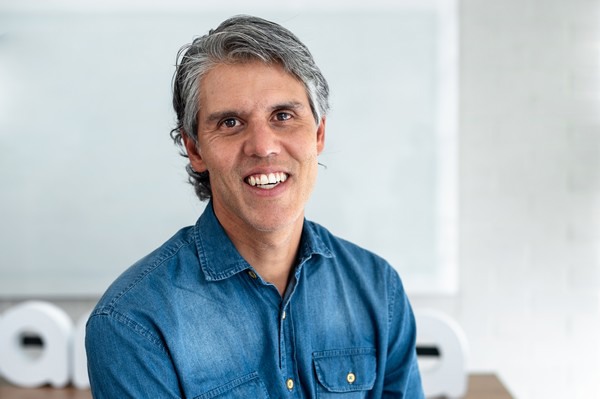
Ricardo Uribe.
Environmental responsibility
"The main foundation of sustainability is environmental responsibility. At Cartama, we are committed to the protection of forests, soils and biodiversity. Together with the most prestigious university in Colombia, we have carried out ecological inventories in Cartama's production units in the departments of Caldas and Risaralda, discovering that our avocado forests perfectly coexist with native flora and fauna and have become biological corridors for animals. Many different species have been observed moving around our avocado forests, from opossums to ocelots."
"With the ecological inventories we have carried out over two years, we have made school kits that we delivered to schools in the area so that children can get to know the species present, grow aware of the richness of their territory and be motivate to look after it. For us, that has been the most important result: being able to give the results of our study back to the community, so that they themselves can become the future protectors of the fauna and flora of Colombia."
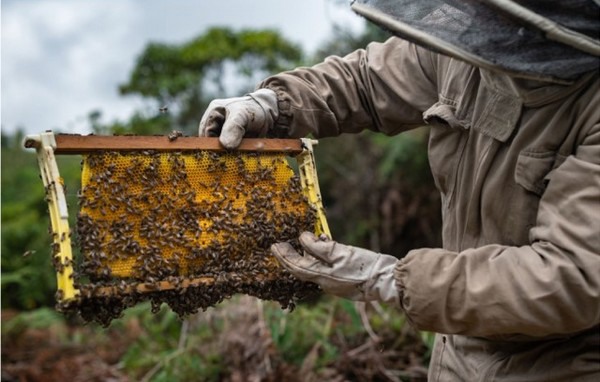
"Increasing the bee population is another of our goals. To do this, we are collaborating with the Californian technology company Ubees. Sensors have been placed to monitor the bee parasite and pathogen levels and their exposure to pesticides, as well as to evaluate their nutrition. All the information we are collecting in the honeycombs where we have implemented the sensors is being very useful for us to take care of the populations and get them to grow."
"In the framework of our environmental responsibility we also have a firm commitment to renewable energies," says Ricardo Uribe. "Today we are generating 25,000 kWh per month, with which we are ceasing to emit 2,500 tons of CO₂ into the atmosphere. This is the equivalent to planting 208,000 native trees. To this we must add the CO₂ absorbed by the 1,500 hectares of protected native forest that Cartama has."
Social responsibility
"The second key goal for us is to overcome inequalities. Cartama is a people-centered company and our goal is to work hand in hand with our community and generate quality employment with which people are happy."
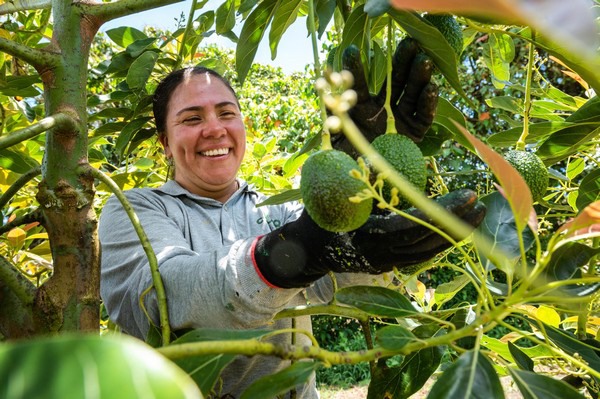
Education is very important for the company, says Ricardo. "For example, we are going to invest US$40,000 in the La Juventud school, in the municipality of Támesis, in Antioquia, to reactivate it and equip it with computers for the students. We also have a new project with CESDE, with which we are developing a labor technique in agricultural production, and we are giving the opportunity to all our experts who did not finish high school to do so with the collaboration of Comfama."
"It should be noted that we cultivate in areas that have dealt with conflicts in the past, especially due to the presence of illegal groups, such as the FARC or self-defense groups, and in those municipalities, we have given their inhabitants the great opportunity to have a decent and well-paid job. In fact, practically 100% of the labor force in those areas is linked to avocado cultivation," says Ricardo, who claims that Cartama is aligned with 9 of the UN SDGs in its 2030 agenda.
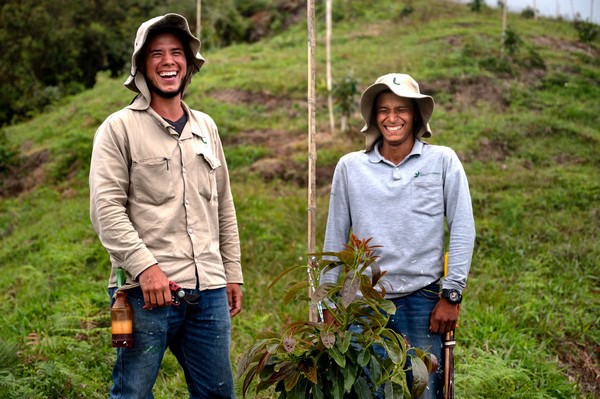
"Also, last year we became a B Company. Most importantly, we were the company in the agricultural sector with the best score in governance in all of Latin America. That is extremely important, because that is what we are working on: our people. And this achievement is not only important for Cartama, but for the country and for the entire avocado community in Colombia," says the company's founder.
Cartama Ecosystem
Cartama has developed a genuine concept that integrates production and protection of the environment and the communities in the areas where it operates, sharing its benefits with its expert growers, some 300 small and medium-sized avocado growers who contribute to and participate in the Cartama ecosystem.
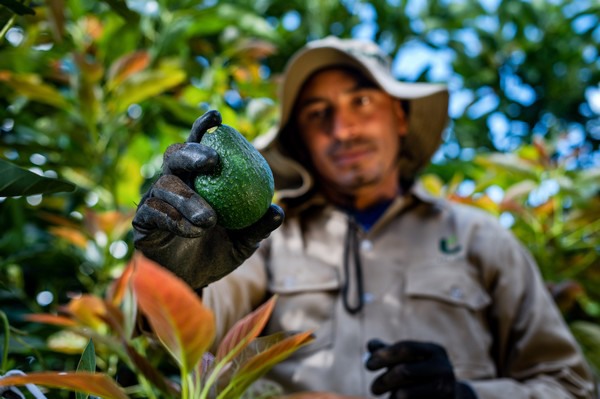
"Our idea is to generate shared value. The company provides first level technical assistance to our producers and we provide them with precision agriculture solutions, such as the state-of-the-art drone acquired by the Cartama research group, which is equipped with multispectral cameras to analyze crops from the air and is at the service of all of them."
"There is also the Avolab laboratory and the avocado nursery, located in the municipality of Supía. All the knowledge generated there will end up at the service of avocados in Colombia. Our nursery currently has a capacity of 500,000 trees per year, but with the latest expansion, we are going to increase our production to close to one million. With these, we will manage not only to fill up Cartama's plantations and renew the oldest orchards, but we will also sell trees of the best quality throughout the country, thereby strengthening the Colombian industry. This is the result of more than 20 years of work and research."
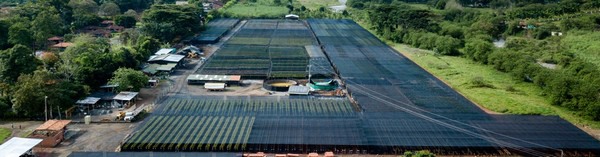
"We are also helping our associated producers in the acquisition of inputs, and we are offering them financial services and advantageous credit lines thanks to an agreement we reached with the largest bank in Colombia: Bancolombia."
"At Cartama, we want to bring progress to Colombian agriculture, so that people can live from it and give back as much as they receive. That will bring true peace to this country. It is important to keep in mind that 78% of the income of an avocado company stays in the area of influence."
New target markets in 2022
The importance of Europe for Cartama's avocados is evidenced by the company's establishment of a commercial office in Rotterdam. In fact, 90% of the sales volume of the Medellin-based firm currently corresponds to this continent. "This operation has been successful and the performance has been spectacular. In 2022, our goal is to enter 5 new markets: Hong Kong, Canada, Italy, Argentina and Chile. Chile in particular is a very interesting market for Colombia because of the proximity and because it has a strong domestic market with quite interesting prices."
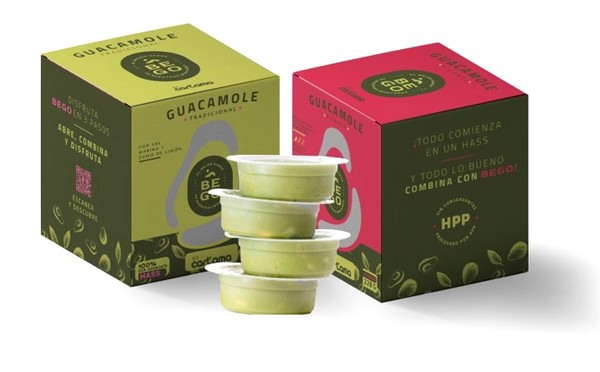
"We have also finally launched our own brand of guacamole, called Bego, which is how the native inhabitants of Antioquia called avocados. We have developed two flavors, one with sea salt and lime and another with chili, presented in individual tubs. We are already selling them in Colombia's main supermarkets and they will soon reach Europe," says Ricardo Uribe.
 For more information:
Cartama
Carrera 33 N.º 7 - 29
Edificio Bianco, Oficina 402
Medellín, Colombia
Tel.: +57 444 75 70
https://cartama.com