The Dutch potato company, Agrico is a global player in the field of seed and ware potatoes and potato varieties. Developing innovative types that suit various climates and markets form an essential part of the company.
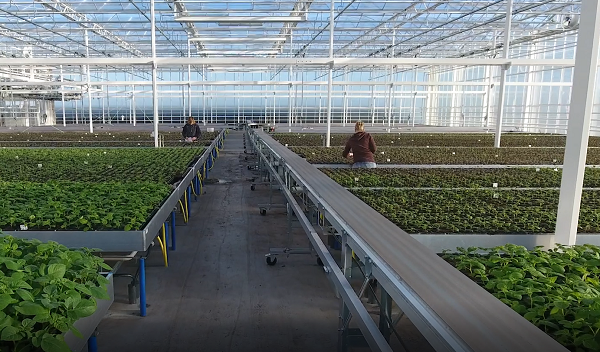 Agrico Research in Bant, Noordoostpolder, the Netherlands, has a 4,000m2 greenhouse complex. They develop and closely study new potato varieties.
"To serve local markets even better, we now have a branch or representation in more than 80 countries," says Eric Vos. Agrico is a large potato cooperative with more than 800 active members. Together, they cultivate 500,000 tons of seed potatoes alone.
Most of these are destined for export. Eric is Agrico's seed potatoes export manager. He, and five other export managers, are responsible for the worldwide sales of the seed potatoes. "We trade our seed potatoes to about 85 countries," he begins.
"I deal with the Dutch, Belgian and German markets. I focus mainly on potato varieties for the french fries industry. Other important destinations in Europe are, for example, Spain and Italy. We also do a lot in Eastern Europe, including the Balkans and Poland. Our biggest overseas markets are Algeria, Egypt, Syria, Cuba, Bangladesh, and Morocco."
Local markets get local produce
The seed potato export season starts in October with the early destinations. That continues until mid-January, after which Southern Europe gets its first seed potatoes. Then, in March and April, it is Eastern and Northwestern Europe's turn.
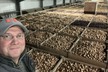
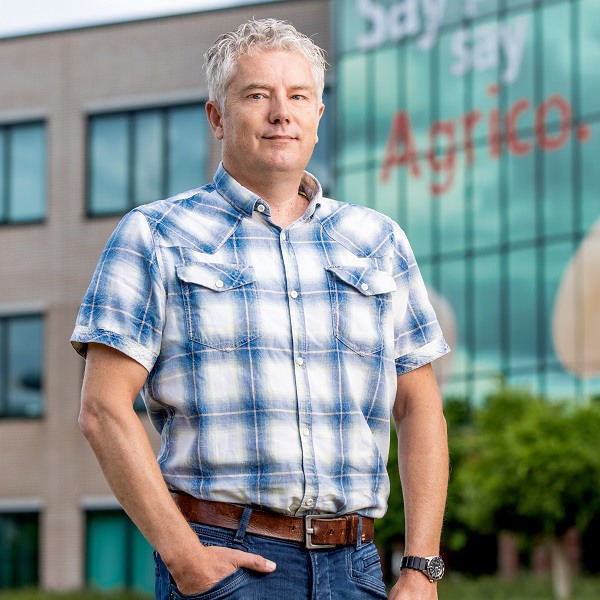 Eric Vos, seed potatoes export manager at Agrico
Most of Agrico's seed potatoes come from 15,000 hectares in the Netherlands. The company also has several foreign subsidiaries. These include Desmazières in France, Parkland in Canada, Agrico UK, Agrico Poland, Agrico Nordic in Sweden, AR Tarim in Turkey, Interseme in Slovenia, and Agrico PSA in Kenya.
Eric says the company's subsidiaries' primary function is to supply the local markets. "We are, for example, not allowed to export to Canada. France prefers locally-grown seed potatoes. And we cultivate Class A seed potatoes in Poland for the Polish market."
Good, high-yield crop
Each country has a different climate, market requirements, and legislation around crop protection products. Despite this, a good crop with high yields is the most important condition in all the markets. "When growing for the french fries industry, for example, yield is still number one."
"The varieties must, naturally, deliver quality. But now that costs are increasing and prices have to rise, high yields are crucial. Everything's getting pricier, and everyone in the chain has to deal with this, from growers to manufacturers," explains Vos.
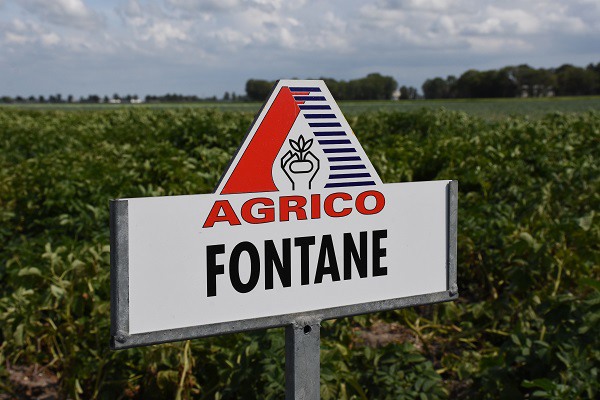 Fontane and Sinora are the top processed potato varieties
"That makes more sense, price-wise, than exporting from the Netherlands. Our international production is slowly expanding. In France, for instance, seed potato production for the french fries industry is growing. There are more cultivation expansion opportunities there than in the Netherlands," says Eric.
"Also, cultivation is being moved to different soils. And potato varieties must perform well in sandy soils. Virus resistance has been important in recent years too. You may no longer use crop protection agents against, say, Phytophthora. That's no longer something we just have to consider; it's now law. The rules around using (artificial) fertilizer (nitrogen legislation) are becoming stricter too."
"The availability of water, and whether or not you can use it for irrigation, is also an issue," adds Eric. What makes developing new varieties especially challenging, according to him, is that you have to look very far ahead. "Yield and quality are standard characteristics; shifting to lighter soils, for example, has gradually been added."
Naturally resistant varieties
The french fries industry has expanded especially rapidly in recent years. Agrico could not have foreseen this. "But we predicted resistance to Phytophthora and general resistance and tolerance years ago. And we've been a hugely important spearhead in this for years."
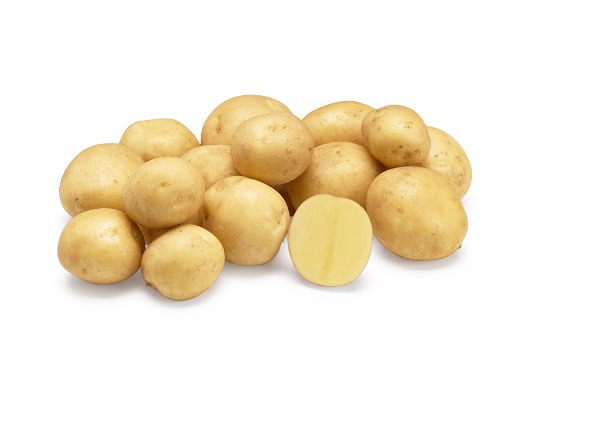 Jacky is a Next Generation potato for retailers and the processing industry. This variety has good yields, and both its foliage and tuber are Phytophthora-resistant.
"Our breeding company Agrico Research develops our new varieties. It's hard at work developing new, innovative potato varieties and is the knowledge institute in this field. Breeding varieties resistant to, for instance, Phytophthora, is an important goal of our potato breeding," continues Eric.
"That has resulted in, among others, our Next Generation varieties. These are naturally resistant to Phytophthora." The breeding and research company focuses on other things too. These are higher yields, improved nutrient levels, and renewed flavor profiles. As well as suitability for specific climates and soil types.
Eric says Agrico has roughly 100 varieties. They begin new trials every year too. The goal is to be able to offer the desired variety for every destination and climate. To achieve this, the potato cooperative has experimental fields in various countries worldwide.
Search for good, nice-skinned variety continues
Does a thin-skinned potato offer opportunities? Eric says that a good variety with a nice skin for table and chilled potatoes, and perhaps even French fries do have potential. "Demand for nice-skinned potatoes is increasing, also in the french fries industry. It's quite difficult to develop a profitable potato variety with nice skin. That's partly because these often get damaged more easily. But it certainly interests us."
"The market for organic varieties is also still growing slightly. Yet we mainly see a future in our Next Generation varieties. We're still the largest in organic potato varieties. The Next Generation varieties also offer great added value to the conventional segment. Organic is often associated with a lower yield. These Next Generation varieties, however, have good yields and are resistant to Phytophthora," says the export manager.
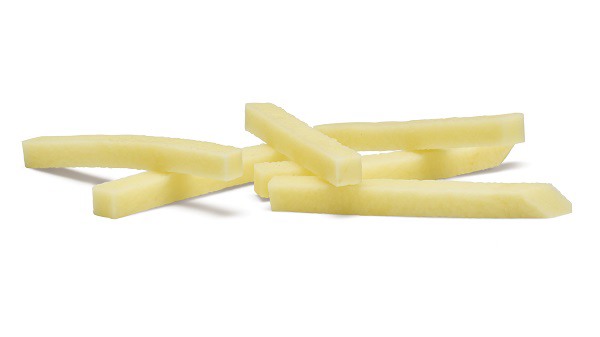 Palace is a high-yielding processing variety used for french fries. It can grow in diverse soil types
Agrico has good partnerships with various players in the French, Dutch, Belgian french fries industries. The potato company, therefore, is well aware of what customers want and can respond to this with new varieties. Fontane and Sinora are the top potato processing industry varieties. Marquis, particularly suitable for long storage, complement these. "We've also developed numerous promising new varieties."
"These include Lugano and Armedi (resistant to nematodes), Palace (bulk fries), Prince (more for the fast-food segment, with a great shelf life), and Next Generation varieties like Nirvana. These are currently in the introduction phase. So, we're looking for start-up partners. We make long-term agreements and then build up acreage. These varieties have excellent chances of gaining a permanent spot in the french fry variety segment," Eric concludes.
Agrico has a table potato division too. "Here, we cultivate a diverse range of organic and conventional Agrico varieties for retailers and the processing industry. We have approximately 65 affiliated organic growers and an area of more than 570 hectares. So, Agrico is the largest supplier of organically-grown table potatoes." These potatoes reach store shelves via subsidiary and wholesaler Leo de Kock.
Eric Vos
[email protected]
 Agrico
Duit 15
8305 BB Emmeloord
+31 (0)527 639980
www.agrico.nl