"The market doesn't have the correct cost ratio," said Charles Cattoir of Primalof in December. This Belgian company grows and sells chicory. "Production costs are constantly rising. We don't have control over all of these. Things like electricity, gas, fuel, and protective materials needed to adhere to the COVID-19 measures." This imbalance is putting pressure on some consumer purchases.
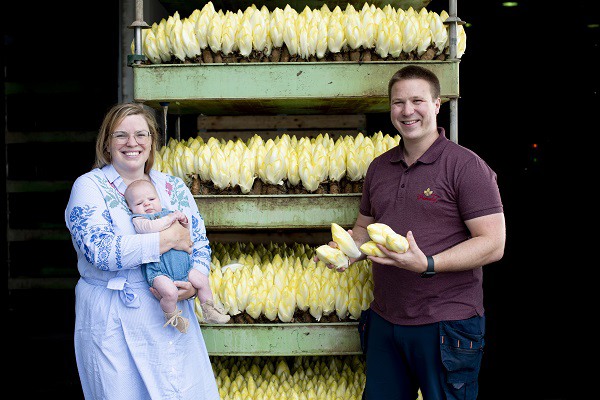
Charles does not know if it is because people could be starting to prefer other channels - local or buying directly from growers - over retailers. "People seem to be less inclined to purchase fresh fruits and vegetables. That could be why supermarkets and their suppliers' market share grew during the pandemic. They are slowly relinquishing that now." The past two years have been good for the chicory sector with good sales at nice prices and room for investment.
Still, Charles was less optimistic in mid-December. "There are nice pen yields, so chicory supplies will continue to be good. The question is how sales will evolve." December is usually a top sales month, though, volume and sales-wise. "Volumes and prices are down, and costs are getting so high that margins are getting very thin." Yet, opportunities remain. "All things can and will recover over time," continues Cattoir.
Imbalance
The chicory grower says the market is also imbalanced. Primalof supplies the retail, industrial, and wholesale channels. Industry demand is more stable, while that from supermarkets fluctuates. In the retail channel, margins are unevenly distributed along the chain. Growers benefited from higher margins over the past two years.
That was at the expense of trade and retail. Now, the opposite is true. "On that front, there's an imbalance. It doesn't benefit anyone in the long run: not for retailers or traders and not for growers. A balanced market is much better for everyone. For the long term, it's important to regain that balance and for everyone to earn their piece from chicory."
Long-term relationships
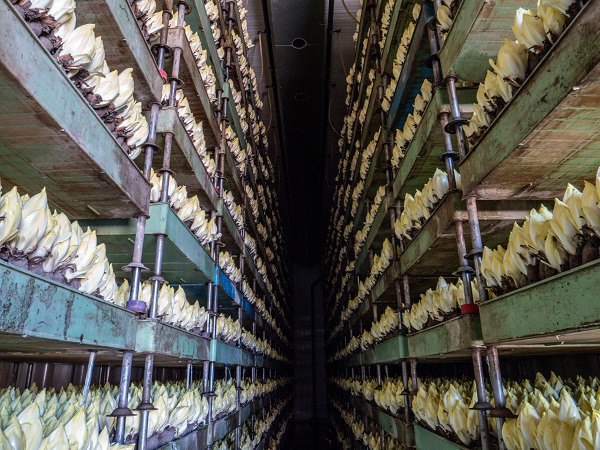
Charles thinks the chicory sector will continue professionalizing. The tendency is to increasingly develop long-term customer relationships, regardless of which sales channel is involved. That allows for further development of chicory businesses. Charles thinks there might only be a few major players left on the Belgian chicory market within a few years. These will mainly do large-scale, qualitative, hydro chicory cultivation.
Specialization plays a role. "In the past, growers used to do different crops in one company. That could well change. Focus and specialization have proved successful in other sectors," concludes Charles. He does not think small growers will disappear completely. They will just focus more on chicory market niches, such as ground chicory root or mini chicory. (MW)
Sustainability important when choosing flow pack
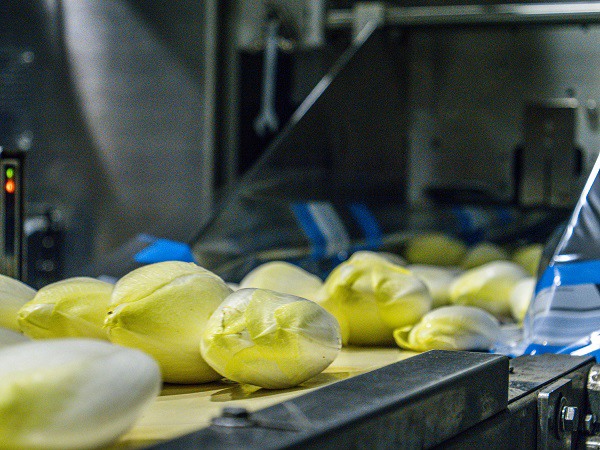
"When choosing packaging for their chicory, Primalof considered various options," says Alexander Tack. He does sales and accounts at GH. This Belgian company focuses on packaging solutions for products like fresh food. "Sustainability was an important aspect, both for Primalof and its retail partners. The trend of banning plastic packaging for fruit and vegetables continues. However, packing chicory in flow packs still offers many advantages."
Hygiene
It offered a hygienic solution, particularly during the pandemic, Alexander points out. "The packaging also protects the product's quality and extends its shelf life. It has integrated, smart light filters, for instance. So, the chicory doesn't discolor as fast either. That helps the product retain its flavor for longer and, so, discourages food waste."
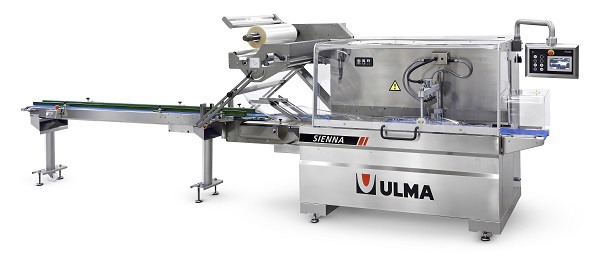
"The film contains micro-perforations too. These prevent condensation from forming, and the chicory from drying out." Packaging chicory in flowpack has another advantage - you can print on the packaging. "By personalizing the packaging, Primalof can give consumers targeted information about the product's versatility," explains Alexander.
Return on investment
Automating the chicory packaging has yet another benefit. "Packing chicory by hand in pre-formed bags is labor-intensive and time-consuming. The flowpack solution lets Primalof package its product faster and more efficiently. And save on staffing. So they can recoup their investment more quickly. This return on investment was a decisive factor in Primalof choosing GH-Ulma's flowpack solution. Together we've certainly found the right way to pack their chicory. It's detail-orientated, sustainable, and respects the product," Alexander concludes.
Alexander Tack
[email protected]
Ulma Packaging
www.ulmapackaging.com
Charles Cattoir Primalof
Leeg Bracht 23
9860 Balegem, België
+32 (0)483 48 47 17
[email protected]
www.primalof.be