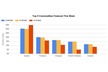
In Europe, women on average eat more fruit and vegetables than men. This is shown by research carried out by the Norwegian University of Agder. It also appears that people with a higher level of education do that more than people with a lower level of education. The research results were published on Wednesday in the scientific journal PLOS ONE.
According to the researchers, Southern Europeans eat the most fruit, while people in the north eat more vegetables. Residents of Eastern European countries eat on average the least fruit and vegetables. The World Health Organization (WHO) advises people to take five portions of fruit or vegetables a day.
Main outcome measures
Fruit and vegetable consumption was measured using two single frequency questions. Responses were split into low (< once a day) and high (≥ once a day) consumption. The association between consumption of fruit and vegetables and gender, educational level, regional affiliation was examined using logistic regression analyses.
Results
Overall, females showed increased odds of consuming fruit and vegetables compared to males. High educated participants showed increased odds of consuming fruit and vegetables compared to low educated participants.
The results also showed that participants living in Eastern Europe had the lowest odds of consuming fruit and vegetables, whereas participants from Southern- and Northern Europe had the highest odds of consuming fruit and vegetables, respectively.
Results from interaction analyses confirmed the positive association between fruit and vegetable consumption and educational level, although for some European regions, decreased odds of fruit and vegetables was observed among medium educated participants compared to those with low education.
Source: journals.plos.org