According to Eurostat data, the EU imported fruit and vegetables from third countries for a value of around €19.1 billion in 2015. Fruit imports represented 88.4% of the total.
Dried fruit represented the most value (26.2%) followed by bananas (17.7%), dates, figs, pineapples and avocados (together 11.5%), grapes (9.9%) and citrus fruit (9.1%). Fruit and vegetables were imported by a large number of countries all over the world however, in the period of reference, a fourth of the total value came from only two countries: the US (15.0%) and Turkey (10.7%), followed by South Africa (8.4%), Morocco (6.7%) and Costa Rica (6.2%). Almost half of the total fruit value (including dried fruit) and fresh vegetables came from these five countries.
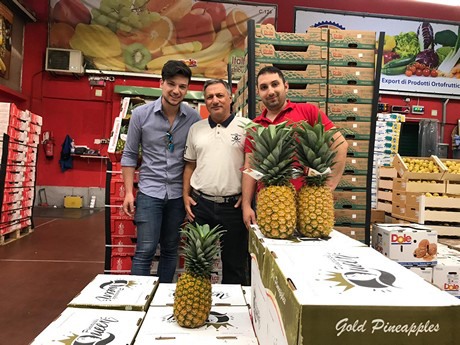 ItalFrutta Distribuzioni stand at M.O. in Milan. Left to right: Sandro Todaro (administrator), Lino Campanella (exotic fruit sales manager), Umberto Musso (sales director).
Three quarters of dried fruits were imported from the US (53.2%) and Turkey (21.3%); two thirds of bananas came from central and southern America - Colombia (26.0%), Ecuador (24.5%), Costa Rica (17.0%); two fifths of dates, figs, avocados and pineapples came from Costa Rica (24.5%) and Peru (16.3%).
Dried fruit is definitely the most imported product, although it seems unbelievable that members states that have historically produced dried fruit (Italy being one of them) have not felt the need to fill a gap that has become a great advantage for the US, Turkey and Middle East.
The dynamics that characterized the pineapple market
In 2018, the EU imported 1 million tons of pineapples. The Netherlands and Belgium were the leading players when it came to imports and redistribution within the EU. Between 2012 and 2018, Belgium gave way to Spain, the UK and Italy. The latter recorded an increase in volumes from 104,800 to 165,400 tons for a value of approximately €103 million.
Wholesale prices in Italy for the first 7 months of 2019
In Italy, pineapples are mainly destined to northern regions and Lombardy more in particular. FreshPlaza talked about it with Lino Campanella, exotic fruit sales manager for Italfrutta Distribuzioni Srl.

"Volumes and prices have remained substantially unvaried between January and March. Good quantities were imported and wholesale prices hovered between €0.70 and €0.80/kg. Between April and May, with the start of the spring and summer season, prices increased up to €1.00/kg."
"Things changed in June/July due to the lack of produce and livelier demand on a global level. The fewer volumes imported led to an increase in wholesale prices up to €1.20/kg. The pineapple market is evolving, also thanks to quicker ship routes and a more accurate selection. This way, pineapples are riper, with a better color and aroma similar to that of the produce transported by air. Of course prices are 20-25% higher than those of the traditional produce, but final consumers seem to like them. Traditional pineapples, which are greener and more resistant, are used in the fresh-cut and restaurant industries."