Florida blueberries got hammered by a freeze in late January, early February and most growers lost two-thirds to about 75 percent of their crop. When the first damage assessments started back in February, nobody thought of an impact this magnitude. However, since then, the estimated damage has continued to creep up. "I think the damage at our farm is closer to 75 percent," says Austin Sigety with Frogmore Fresh in Central Florida. While growers in the southern part of Florida are in better shape, the central and northern parts of the state got hammered.
Harvest started two months late
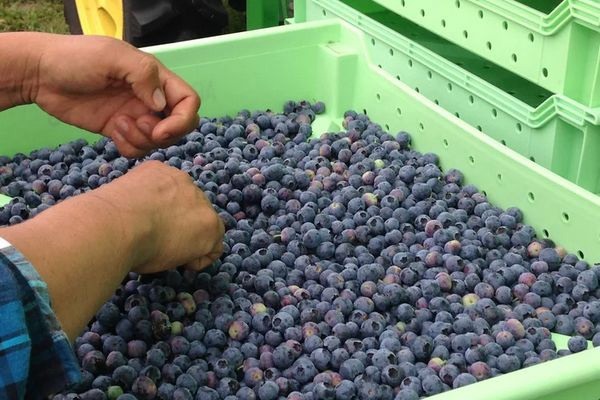
The company's blueberry harvest normally starts in the second or third week of February, but all of the early fruit was lost. "That early fruit was already developed when the freeze hit, so there was nothing for us to harvest during the early part of the season," Sigety shared. The farm also lost most of its advanced fruit and had nothing to pick until the second week of April. "That's when our season started, about two months later than normal."
The season will continue for about another week and Sigety doesn't expect to have much fruit after May 15. Usually, the company's season runs until the third week of May but because of the lighter fruit load, the fruit that's left on the bushes ripens faster. "There won't be much commercial volume left after mid-May," Sigety mentioned.
 © Frogmore Fresh
Transition to Georgia
As a result, the domestic crop has been short, and it has been tough to fill orders. However, retailers have been able to complement the domestic supply with volumes from Peru during February and some part of March. In addition, they've been bringing in more fruit from Mexico, although the country's volumes are dropping rapidly and from now through October, retailers and consumers depend on domestic supply. Georgia's volumes are ramping up, and the early varieties are now being picked. "Georgia wasn't hugely hit by the freeze, so volumes should gradually go back to normal." Other regions growing blueberries include California, North Carolina, New Jersey, Michigan, and the Pacific Northwest.
Sigety is hopeful this freeze was very much an exception because the last time the state witnessed a freeze of this severity was back in 2010. With proper frost protection, blueberries can handle temperatures as low as 28 or 27°F, but during the February freeze, temperatures were as low as 18 and 19°F. "There was a vast difference in magnitude this winter," he said. To protect the plants and the fruit against temperatures this low, it would have been hours and hours of running water that would have turned into ice on the bushes. Some growers who decided to run water are not only facing a lost crop but also lost fields.
Harvest
While harvest is an investment and costs for laborers, refrigerated trucks, etc. are very high, it is important to supply retailers with the fruit that's available. "Had we decided not to harvest, retailers would have shifted to import fruit. By putting in effort, we send the right message to our customers and show them we're still here. In addition, I much rather want my fruit to end up on a store shelf versus letting it sit in the field."
As a result of short supply, the market has been firm throughout the Florida season. However, it will start softening fast now that Georgia production is coming on.
 For more information:
Austin Sigety
Frogmore Fresh
Tel: 813-416-0526
[email protected]
www.frogmorefresh.com