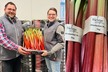
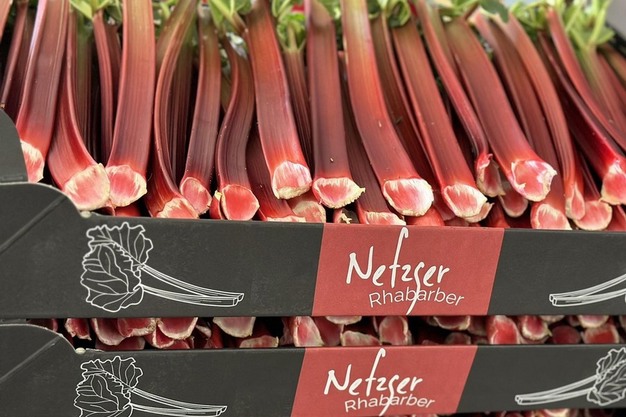
As was the case last year, the first regional rhubarb was harvested in mid-March at the Nefzger farm in Sainbach. Prices were relatively high at the start of the season but, according to producer Peter Nefzger, are now trending downward accordingly. "Starting this week, the first promotions are now also taking place in southern German food retail stores. Unfortunately, this didn't work out before Easter, as the exact harvest volumes in weeks 12–13 were not yet foreseeable, and it was ultimately too risky for food retailers to plan such promotions."
 © Nefzger Rhabarber
Bavarian raspberries and rhubarb: Rhubarb growers are also concerned about the consequences of the planthopper Petanstiridius leporinus, although no significant harvest losses have been observed so far.
Following the high-priced start to the season, prices have tended to come under pressure in recent weeks. "Supply volumes from the larger growing regions in North Rhine-Westphalia, Baden-Württemberg, and the Palatinate have recently increased significantly, which is reflected in the price. Imported goods, such as those from the Netherlands, are primarily offered in the early season, however. We are fortunate, after all, that here in Bavaria we are among the few rhubarb specialists and thus have an important competitive advantage," says Nefzger, who primarily supplies food retailers and wholesale markets in southern Germany. The quality and length of the rhubarb have been consistently good so far, which is primarily due to favorable growing conditions.
 © Nefzger Rhabarber
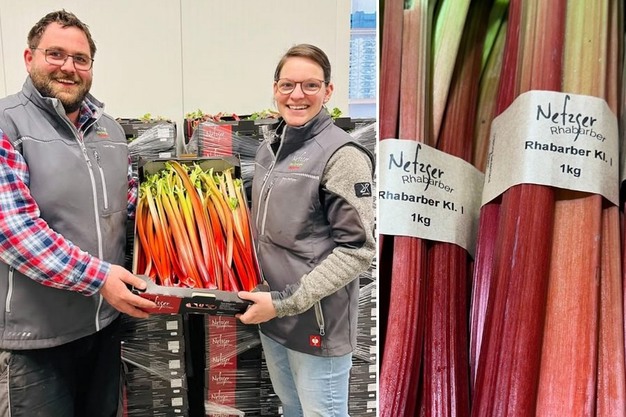
Peter Nefzger and his wife have been dedicated to rhubarb cultivation for five years now. Bundled rhubarb in 750 g and 1.5 kg packages is enjoying increasing popularity in retail stores.
Rhubarb is traditionally one of the first harbingers of spring in the new season and is primarily marketed alongside asparagus. The seasonal pattern is also nearly identical to that of asparagus, according to Nefzger, who also markets organic asparagus from his own farm. "Initially, demand is usually high, then it levels off somewhat, and toward the end of the season on St. John's Day, there's another annual final surge. After the season ends, or in July, we usually still ship produce to Switzerland." About 80% of the harvest is ultimately sold on the fresh produce market, but industrial customers are also served. Homemade rhubarb juice is also sold in the neighborhood.
 © Hugo Huijbers | FreshPlaza.com
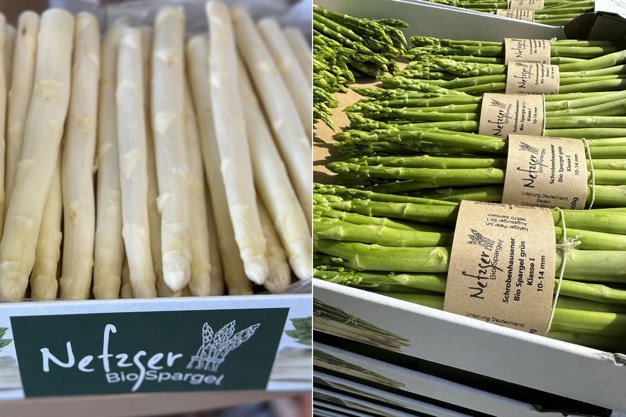
Organic asparagus has been available since the last week of March.
Cultivation of specialty crops
Peter Nefzger has gradually restructured his parents' farm over the past few years. In 2018, the existing asparagus operation was converted to organic farming, and two years later, the portfolio was expanded to include rhubarb. Edible squash has rounded out the family farm's range of specialty crops in recent years. "Labor costs currently account for the largest share of expenses in cultivation, followed by logistics, fertilizer, and other inputs," confirms Nefzger. Nevertheless, he plans to expand the rhubarb acreage again after the current season to meet rising demand in the future.
For more information:
Peter Nefzger
Nefzger Rhabarber
Augsburger Str. 1
86570 Sainbach
Telephone: +49 (0) 171 3550297
[email protected]
www.instagram.com