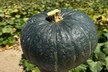
In recent years, pumpkins have consolidated their role on the Italian fruit and vegetable scene, changing from a seasonal product to a constant presence on the shelves and in the kitchen. This evolution reflects a profound change in consumption and requires operators to manage the supply chain in an increasingly structured manner.
"We are witnessing a continuous growth in demand, not only in the autumn months, but all year round," explains Alessandro Busanelli of Lo Casto Srl. "Over the past two to three years, we have gone from around 80 tonnes in 2021 to annual volumes of between 500 and 600 tonnes. This is a sign of a structural change in eating habits."
The growing demand has led companies to rethink procurement, focusing on constant product availability. In this scenario, Lo Casto can count on a well-established network of suppliers and importers to guarantee continuity and flexibility, with different varieties available throughout the year. During periods of reduced domestic availability, the market relies mainly on foreign products from Portugal, Egypt, and South Africa.
 © Lo Casto
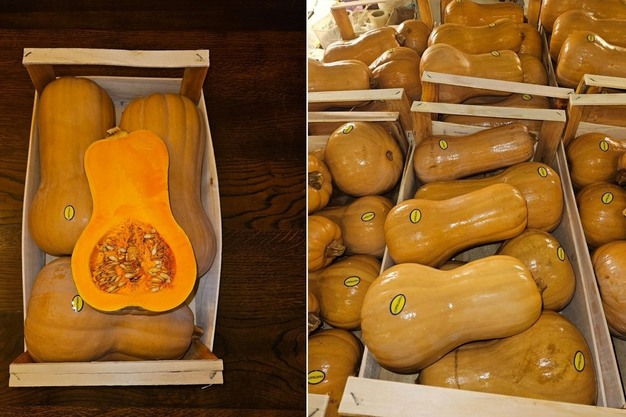
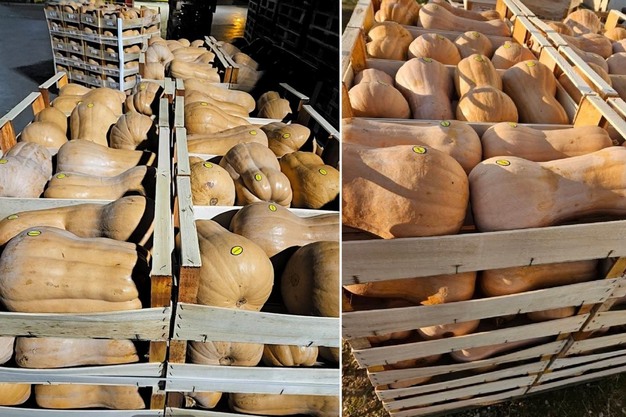
It is precisely in this context that the rediscovery of late butternut squash from the Veneto is taking place, which is now the focus of renewed commercial attention. "It is a strategic product from several points of view. It has a strong visual impact, which is increasingly decisive in our sector, and it has high organoleptic qualities, with an intense orange flesh and a sweet, delicate taste."
Appearance, in fact, plays a fundamental role in sales. Consumers tend to choose with their eyes, especially in big retail chains, so a regular shape, uniform colour, and intact skin directly affect shelf rotation. "Good post-harvest processing, from cleaning to brushing, contributes to enhancing the product and making it more attractive."
From a commercial point of view, Butternut squash from the Veneto also offers a competitive advantage related to logistics costs. The short supply chain makes it possible to reduce transport costs, which are particularly relevant today due to the rise in fuel prices, and to guarantee very fast delivery times. "We are talking about a product that often arrives within 24 hours, with obvious benefits in terms of freshness and continuity. The differences with respect to the foreign product are mainly in terms of freshness and shelf life. Imported pumpkins, while maintaining high quality standards, face longer travel times, which can affect shelf life and consistency. In contrast, the Veneto production guarantees greater freshness, a more compact flesh, and more uniform quality, thanks to direct control of the supply chain."
Another key element is the ability to adapt to different distribution channels. The availability in several sizes makes it possible to respond to market needs in a targeted manner. "Medium-small products are ideal for big and traditional retail chains, while the larger grades find their place in the fresh-cut world, where higher yields are required. This segmentation makes it possible to place the product throughout the supply chain."
 © Lo Casto
The availability of the main sizes (1.2 kg+ and 3 kg+) tends to decrease in late April. For this reason, the company has started to promote smaller sizes, between 800 grams and 1.2 kg, which are doing well on the wholesale market. "It is a solution that allows marketing to be prolonged, while maintaining a good level of quality and aesthetics."
Finally, there is also the subject of organic products, a distinctive yet not always decisive element in commercial dynamics. "It is still not the main purchasing driver on the wholesale market, but it remains an important thing to communicate in order to highlight the work of producers," observes Busanelli.
Looking to the future, pumpkins will continue to offer interesting development opportunities, also thanks to the introduction of seasonal options such as decorative gourds and those linked to specific festivities. "A confirmation of how, once linked to a well-defined seasonality, this product becomes a strategic asset for the entire fruit and vegetable sector," concludes Busanelli.
For more information:
Stefano Lo Casto - owner and sales manager
(summer fruit, vegetables, and tomatoes)
Alessandro Busanelli
(asparagus, pulses, stem vegetables, lettuce, tubers, herbs, tomatoes)
Claudio Martinelli
(citrus fruits, strawberries and berries, various fruits, exotic fruits, summer vegetables)
 Lo Casto Srl
Piazzale Salvador Allende, 2
40064 Ozzano dell'Emilia (BO) - Italy
+39 (0) 51 0224360
[email protected]
www.ortofruttalocasto.it