Researchers have developed genetic markers that allow breeders to identify seedlessness and flower sex type in grapes before vines reach the fruiting stage.
The system is based on a genotyping platform that tests plant DNA for markers linked to specific traits. It enables breeders to predict whether muscadine and other grape varieties will be seedless and self-pollinating, reducing the time and resources required in breeding programs.
The study was led by Margaret Worthington of the Arkansas Agricultural Experiment Station in collaboration with Cornell University, the U.S. Department of Agriculture, Gardens Alive!, and E&J Gallo Winery. The work forms part of the VitisGen3 Project and Vitis-x-Muscadinia initiatives, supported by the USDA National Institute of Food and Agriculture.
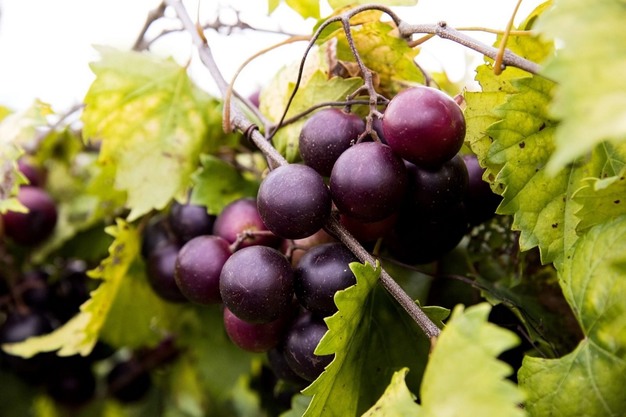 © UADA
Researchers validated the markers using more than 900 hybrid grapes and around 200 cultivated and wild varieties. Predictions for flower sex and seedlessness were confirmed with 100 per cent and 99.7 per cent accuracy, respectively.
"We took leaf samples from mature vines with fruit for the validation," Worthington explained. "The DNA will stay the same regardless of plant age. So, this is proof that it will work for young seedlings, too."
The markers are publicly available and can be applied by breeders working with wine and table grapes.
The development supports ongoing breeding efforts to combine muscadine traits such as disease resistance with the fruit quality and seedlessness of Vitis vinifera. However, compatibility challenges between the two species continue to limit hybrid development.
"Muscadines are in a different subgenus of grape than Vitis. They're related, but not that closely related. It's like a horse and a donkey," Worthington said.
The markers also support the selection of "perfect-flowered" vines, enabling self-pollination and more consistent production.
Breeding programs are already using the markers to remove unsuitable seedlings early in development, allowing resources to be focused on selected candidates.
For more information:
John Lovett
UADA
Tel: +1 479 763 5929
Email: [email protected]
www.aaes.uada.edu