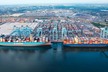
Global trade flows are facing disruption, with multiple data sources indicating widespread port congestion and delays linked to ongoing geopolitical developments involving the U.S., Israel, and Iran.
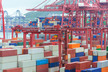
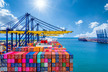
More than 80 per cent of the world's 454 mapped ports are classified in critical status, with 60 to 70 per cent severely congested and 45 to 59 per cent highly congested.
"This shows the impact of the three waves of disrupted cargo," explained Destine Ozuygur, senior market analyst at Xeneta. "The first wave was vessels already in or near the Persian Gulf when the conflict started, the second wave was vessels that departed from Asia before suspensions were announced, and the third wave is of cargo bookings currently being made."
These disruptions have affected vessel schedules, with reliability expected to take time to stabilise. A total of five vessel strings, representing 44,507 TEUs, have been suspended. Four operate between the Far East and the Middle East, accounting for 29,225 TEUs, and one between Europe and the Middle East, accounting for 15,282 TEUs.
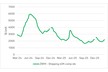
India has emerged as a key transshipment hub, handling increased container volumes. This has led to congestion at ports. Xeneta data shows on-time arrivals at Mundra have fallen from 44 per cent to 31 per cent, with more than one in three vessels arriving at least one week late. At Nhava Sheva, on-time performance has declined from 50 per cent to 33 per cent.
Container velocity has also been affected. At Mundra, 230 containers tracked on March 19 took four days to exit the port. On February 25, before the disruption, 1,668 containers took 7.62 days to exit.
Ocean carriers are adjusting operations by suspending services, rerouting vessels, and increasing freight rates. Longer routes require more fuel, while slow steaming is being used to manage costs, extending transit times further.
Shippers are reassessing logistics strategies, balancing faster and more expensive transport options against slower, lower-cost alternatives.
The disruption is also affecting manufacturing supply chains. Production timelines depend on the availability of raw materials, including petroleum-based products used in more than 6,000 consumer goods. Deliveries of petroleum, LNG, and other commodities that departed at the start of the disruption are now arriving.
Even if transit routes were immediately restored and ports resumed normal operations, it would take several weeks for supply chains to stabilise.
Source: qCaptain