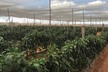
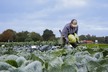
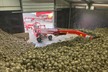
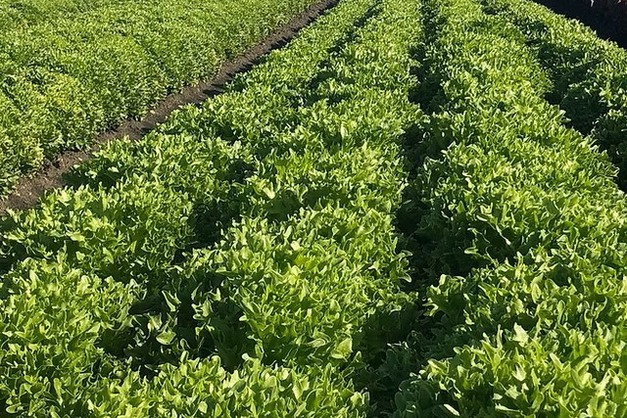
The market for spinach and baby leaf remains tight, constrained by the crop's fragility and the lack of viable export pathways. Demand is largely fixed given that there's only so much leaf people want to eat, and export of such a fragile product is not cost-effective. But the big enemy in growing leafy veg is the weather, particularly the heat and humidity. Even so, Mike Fielden of Boratto Farms says his produce has held up well.
 © Boratto Farms
"Season's been good," he says, with strong performance a feature of the peak demand periods of Christmas and Australia Day. The third market peak, however, is likely to be more challenging. "Easter will be a bit of a struggle because of quality," he explains, after a period of high heat and humidity in late summer led to issues such as tip burn, mildew, and pythium. "In Australia… you're always going to pick up a problem within your three-key-event portfolio."
For a crop that cannot be stored or redirected, those disruptions carry immediate consequences. Supply and demand have to be tightly wed. Unlike in other areas of produce, there's no other outlet, so you can't simply produce more and hope for the best. "I could take a punt in potatoes, but in baby leaf, if you don't have a customer, you're stuffed," Fielden says. "I can't store it; I can't keep it." At the same time, rising input costs and retailer pressure on pricing have eroded margins. "You can't afford to have a return from the acre of land," he notes.
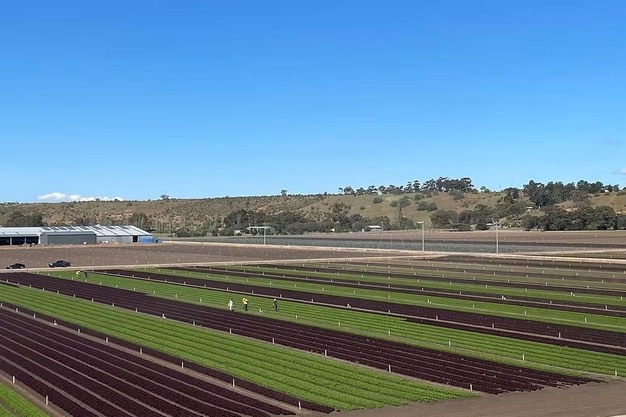 © Boratto Farms
That cost pressure is driving a growing focus on technology, particularly AI, as a way to reduce waste and improve decision-making across the supply chain. Fielden points to two systems in particular: drone-based field mapping from Polybee and in-line quality assessment from GoMicro AI.
Polybee's drones fly over fields to create what Fielden describes as a "digital twin", mapping crop conditions down to leaf level. That allows growers to assess yield and quality before committing further costs. "If they say the crop's not worth harvesting, I don't harvest it… I've only lost up to that point," he says. "I haven't added on my harvest cost and transport costs."
Once the product moves beyond the field, GoMicro AI provides a second layer of control through objective quality assessment. Here, the focus is on removing the subjectivity that has long defined fresh produce trading. "The trouble with how we measure things currently is it's desperately subjective," Fielden says. "I can look at a leaf of spinach, and you can look at it… and we're probably both going to have a different assessment. I might think my spinach is fantastic, but you just might not agree."
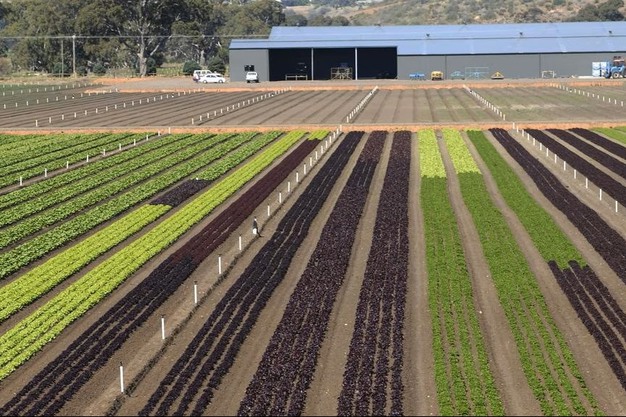 © Boratto Farms
By replacing that human variability with consistent, data-driven evaluation, AI creates a shared standard between grower and buyer. "If you can find something that is an objective measurement, then that takes that away," he says. "It reduces the aggravation between partners."
The cost implications run through the entire chain. Early rejection of substandard crops avoids unnecessary harvesting, transport, and processing, while more accurate grading reduces labour and waste at the factory level. "You can identify through the entire supply chain costs that you can avoid," Fielden says, noting that even small savings compound when applied across multiple stages.
Equally important is the data generated over time. With multiple growing cycles each year, spinach offers a rapid feedback loop, allowing patterns to be identified and production adjusted accordingly. "The beauty of AI is you can collect that data… it tells you exactly what it was like," he says.
In a category where margins are tight and risk is constant, that combination of cost control and consistency is increasingly critical. "The maths soon adds up," Fielden says. "If it gets a better product on the shelf… we're all better off."