At the Spalding site of Peloton Produce, they are currently harvesting Savoy cabbage, red and white cabbage, and cauliflower, and according to Nigel Clare from the company, all is going well.
"We have another 3 weeks in which to harvest the Savoy cabbage before it starts to bolt. What we are harvesting now is all going into a high-humidity store."
Planting is also going well at Peloton Produce, Nigel explains, "We normally start on the 6th March, weather permitting, and this year planting was on time and conditions were perfect, and we are hoping for a great season, we have had enough rain over the winter, for our planting operation so we could not have got off to a better start. We have broccoli under polythene, which will be ready for harvest in June and July, and the Savoy cabbage is also grown under polythene for harvesting in June. We are currently planting cauliflower, and next week we will start planning sweetheart cabbage.
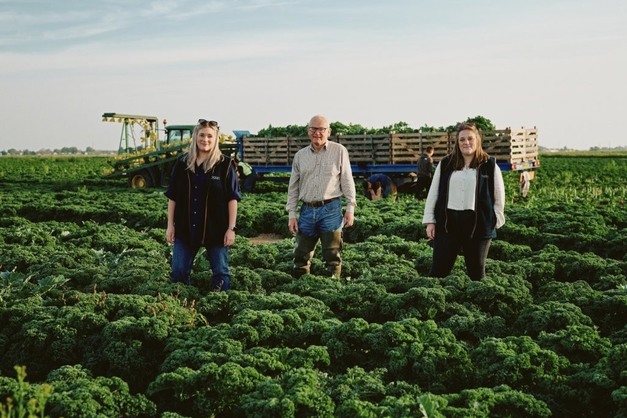 © Peloton ProduceNigel with his daughters, Louisa, commercial manager, and Tiffany, technical manager
Nigel goes on to explain current availability and highlights issues in Spain: "There is a shortage of broccoli from Spain due to the very wet weather they have received this winter that has at times halted our Spanish planting programme, thus giving us peaks and troughs in availability. We are currently experiencing a reduction in supply, which is not ideal, but the shortage may stimulate demand for other vegetables such as cauliflower. It is very interesting that all winter our Cornish demand for Cauliflower has been down circa 20% and now as the French cauliflower winter campaign is nearly over and prices are rising to circa £12 a box, we are seeing our UK demand getting back to normal levels, so it is clear to me that French cauliflower coming into the UK this winter has damaged our Cornish demand, which is not great for UK production. However, as things are now getting back on track and Spanish broccoli is going short, I am sure demand will now be in line with production."
Effects of Middle East conflict
The economic effects of the conflict in the Middle East are already being felt by growers in the UK; red diesel and normal diesel prices have increased by around 10-20%.
"This will have an impact on our budget, and we are talking to our customers. The increase in diesel is the first thing we notice, as it immediately adds costs such as harvesting a crop and getting the product to the factory, then we have increased distribution costs getting our product to our customers. As we are in the middle of our planting season, and using liquid and granular fertilizer, the cost of planting a crop will see an increase; this will be felt more strongly from June onwards, as crops come into harvest. We are currently talking to our customers to get some synergy between what they need and what we need. However, I am concerned that we will not be able to recoup all our costs, and what we are all hoping for is a more profitable season, but the Middle East conflict is not helping us currently.
"On the positive side, planting is going very well, and demand is picking up too, but we do need a campaign to promote the values of healthy British vegetables to inspire our consumers to scratch cook and eat healthy."
For more information:
Nigel Clare
Peloton Produce
Tel: +44 1945 780222
[email protected]
www.pelotonproduce.co.uk