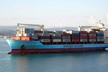
In early March, Maersk rerouted several sailings on its Me11 (Middle East/India–Mediterranean) and Mecl (Middle East/India–US East Coast) services, shifting from the Trans-Suez route to the Cape of Good Hope due to "unforeseen constraints" in the wider Red Sea operating environment.
The company indicated that current conditions are making it more difficult to avoid delays in the region and that updated transport plans will be communicated to affected customers. The changes apply to vessel rotations scheduled over the next three weeks.
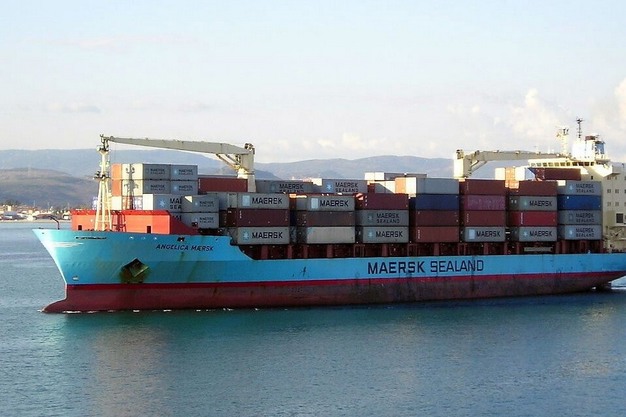 © Maersk
Westbound, Maersk Houston (608W) departing Salalah was rerouted via the Cape of Good Hope with ETD 5 March 2026, followed by Astrid Maersk (609W) with ETD 12 March 2026.
Eastbound movements showed mixed routing decisions. Maersk Herrera (607E) from Algeciras continued via Trans-Suez, while Maersk Hamburg (608E) diverted via the Cape. Angelica Maersk (609E) from Port Said remained on the original route, while Maersk Huacho (610E), also from Port Said, shifted to the Cape of Good Hope.
Additional vessels affected include Maersk Kensington, Maersk Sentosa, and Maersk Detroit. Eastbound, Maersk Senang (605E) from Port Tangiers sailed via the Cape, while Maersk Denver (606E) remained on the Trans-Suez route with ETD 8 March 2026. Maersk Seletar (607E) was also diverted to the Cape.
Maersk stated that these adjustments are temporary and that Trans-Suez routing will continue to be prioritised where feasible.
In February, Maersk and Hapag-Lloyd confirmed a separate routing decision under their Gemini Cooperation. The shared IMX service connecting India and the Middle East with the Mediterranean is planned to transit the Red Sea and Suez Canal with naval assistance, starting mid-February westbound on Albert Maersk and eastbound on Astrid Maersk.
Source: Ships Monthly