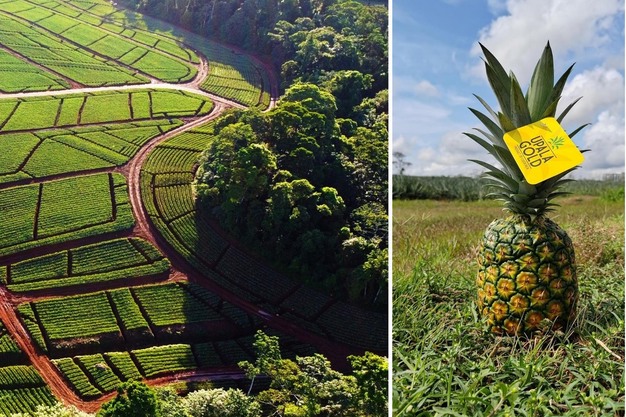
Upala, located in Alajuela province, is part of the northern production corridor alongside Los Chiles and Guatuso, where a large portion of Costa Rica's MD2 pineapple, intended for export, is cultivated. Notable areas like Sarapiquí and San Carlos also play a key role, with well-developed infrastructure, packaging, and logistics to support programs for the United States and Europe.
"Costa Rica remains the world's leading exporter of fresh pineapple. However, today's market requires greater precision in volume and quality," says Alfredo Volio from Upala Agrícola. He explains that national production has stabilized after years of growth, with adjustments in planted areas to prevent oversupply and sharp price drops.
 © Upala Agrícola
The United States remains the primary destination by volume, with the European Union following. "The North American market is more active due to higher turnover, whereas Europe is more organized and strict regarding certification," he noted. In both regions, supermarkets have increased their oversight on waste management, sustainability, and social compliance.
A major ongoing challenge is the rise in production costs. Fertilizers, agrochemicals, cardboard, and labor have all seen consistent increases in recent years. "Today, producing a box costs considerably more than it did three or four years ago, but the selling price has not always kept pace," Volio said.
According to Volio, prices have fluctuated in the market. "We've experienced weeks with strong demand and steady prices, but also periods of pressure when volumes increase," he says. Competition from other origins remains limited due to Costa Rican leadership, but buyers are still employing diversification strategies to reduce risk.
 © Upala Agrícola
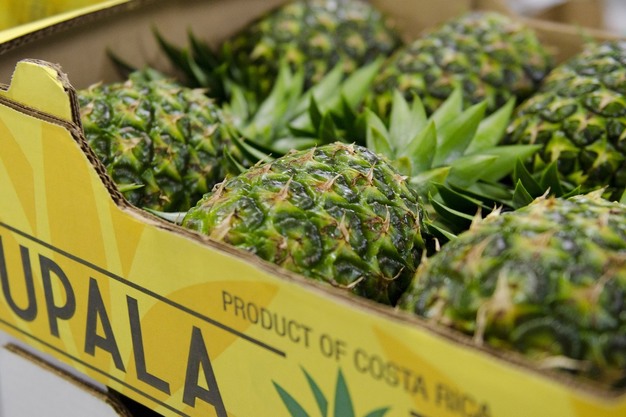
At the competitive level, Costa Rica holds an advantage in logistics and experience. However, other origins, such as the Philippines (Asia's and the Middle East's main supplier) and some Latin American projects, are aiming to expand into alternative markets. Nonetheless, Volio believes that "consistency in quality and the ability to meet programs throughout the year continue to be Costa Rica's strength."
The weather has also impacted planning. Heavy rains or droughts can affect yields and calibres. "The weather is no longer so predictable; this requires more technical management and closer monitoring of each lot," he stated.
Looking ahead, the sector is focusing on improving operational efficiency, adopting agronomic innovations, and maintaining stable commercial relationships. "Consumers still demand pineapples; the challenge is to stay competitive in an environment that is becoming increasingly competitive," he concluded.
 For more information:
Luis Vasquez
Upala Agrícola
Costa Rica
Tel: +506 2480 0100
Email: [email protected]
www.upalagricola.com