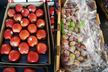
The Regional Ministry of Industry, Tourism, Innovation and Trade of the Generalitat Valenciana, led by Marián Cano, is funding the development of green processes and technologies through Ivace+i Innovation. These efforts aim to transform orange and mandarin waste into innovative, high-value-added solutions for various industrial sectors.
 © Generalitat Valenciana
The DÉLICE proposal focuses on a key current challenge: minimizing food waste and enhancing resource efficiency using circular economy principles. It concentrates on extracting and valorizing pectin, a natural soluble fibre with gelling qualities, to develop biocompatible, edible inkjet inks that can be printed directly onto food.
The project is led by the Institute of Ceramic Technology, with participation from Universitat Jaume I of Castelló and the company Personas y Tecnología. It is funded by the European Union through the European Regional Development Fund (ERDF) Comunitat Valenciana 2021-2027.
Natural sensors that detect deterioration
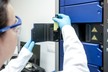
The ITC research team is presently working on formulating inks made from pectin extracted from citrus waste and developing a sensor to detect food spoilage.
These inks are unique because they include sensors that can change colour as the food goes bad. This means the product visually indicates its freshness, helping to prevent the consumption of spoiled food and reducing the waste of good food caused by uncertainty about its freshness.
This solution moves closer to achieving "zero waste" by offering a practical tool to enhance food management throughout the entire value chain.
 © Generalitat Valenciana
Circular economy by design
The project's approach aligns with the needs of the Valencian industrial sector, encouraging both technological progress and the development of ecological consumer products with high added value. The valorization of agri-food waste decreases environmental impact from waste management and creates new economic opportunities.
Additionally, the initiative encourages sustainability in manufacturing by using materials and energy more efficiently and by developing multi-sector applications that can be applied to various productive fields.
In developing the cooperation project, the Institute of Ceramic Technology supplies scientific expertise and research in materials and formulation. Universitat Jaume I conducts research on eco-friendly processes for the valorization of fruit and vegetable waste. Personas y Tecnología, S.L. provides technological know-how for practical implementation and industry transfer.
For more information:
Generalitat Valenciana
comunica.gva.es