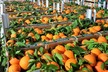
Lemon prices in Bangladesh have increased as supply from Srimangal, Moulvibazar declines toward the end of the production cycle. The area, known for lemon cultivation on hilly and elevated land, supplies multiple districts. With volumes decreasing after the main season, prices have adjusted upward across wholesale and retail markets.
Lemon cultivation in Srimangal covers 1,235 hectares, with an average annual yield of 9 to 10 metric tons per hectare. Around 80 per cent of output is harvested during the main season, with the remaining 20 per cent produced off-season. Total production this season is estimated at approximately 7,500 metric tons.
Earlier in the season, one hali of four lemons traded at Tk 40 to Tk 50, equivalent to Tk 10 to Tk 12.50 per lemon. Current retail prices vary by size, with large lemons selling at Tk 100 to Tk 150 per hali, medium at Tk 80 to Tk 100, and small at Tk 60 to Tk 80. At an exchange rate of roughly Tk 110 per US$1, this equals approximately US$0.55 to US$1.36 per hali, or US$0.14 to US$0.34 per lemon. Retailers report that limited supply is the primary driver.
Wholesale traders are also reporting higher procurement costs. Zahir Mia stated that he purchased 2,000 lemons, with transport bringing the effective cost to Tk 18 per lemon, or Tk 72 per hali, approximately US$0.65 per hali. Entrepreneur Md Atar Ali reported that wholesale carts containing 800 lemons are trading at Tk 17,000 to Tk 18,000, equivalent to approximately US$155 to US$164 per cart. Each cart includes three size grades.
Growers and traders indicate that the price increase is primarily seasonal, rather than linked solely to Ramadan demand. Peak production typically occurs during the monsoon, when yields are higher, and pricing is more stable. During the dry season, output declines, tightening market availability.
Srimangal Upazila Agriculture Officer Md Alauddin stated that current production aligns with official figures but noted that drought and water shortages have reduced output slightly. Deputy Director Md Jalal Uddin added that it is not peak season and that the current fruit has lower juice content. He expects production to increase with the onset of rains.
Agricultural economists point to dependence on seasonal production, irrigation constraints, and climate variability as factors contributing to recurring price volatility in Bangladesh's lemon segment.
Source: Daily Observer