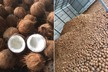
The peak season for Indian coconuts is now just around the corner. 2We can generally deliver all year round – whether pallets or full containers – but larger quantities are mainly available from March to October," reports Navaneethan Vellanaipatty Thangavel from Grofarm uG. "Last year, a severe heatwave resulted in a relatively small harvest with correspondingly high market prices. This year, however, we expect good yields and lower prices."
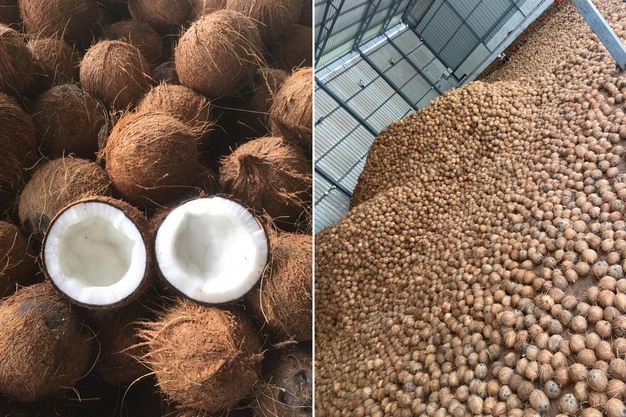 © Grofarm UG
Indian coconuts compete primarily with the Ivory Coast and Brazil. Goods of Vietnamese and Thai origin, on the other hand, are mainly sold to industry.
The Bad Kötzting-based agency is responsible for the import and distribution of Indian coconuts from its own contract cultivation on over 2,000 hectares in southern India. In addition, the growing company has its own storage capacity in the port of Rotterdam and another sales office in the British capital, London. Its customers include both food retailers and wholesalers in large parts of Europe. "We are now listed with many well-known food retail chains, for example, in Germany, Italy, Spain, France, and the UK, and are seeing a general increase in demand for Indian coconuts. Even smaller wholesalers are now specifically asking for goods of Indian origin."
 © Grofarm UG
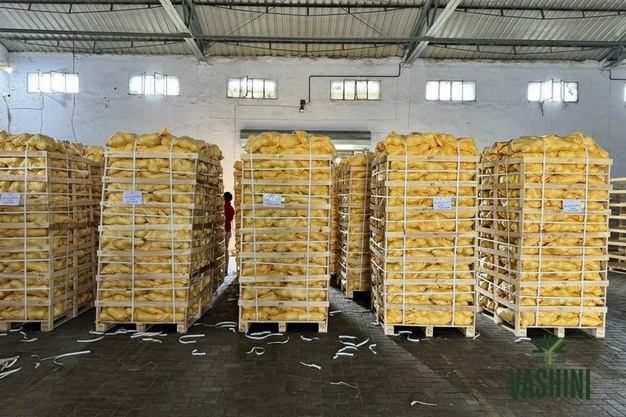
Fresh coconuts for export to Europe. The contract cultivation has Rainforest certification.
Good shelf life and quality
According to the company, the increasing popularity is due to the excellent quality of the goods. "At the source, the best goods with the highest pulp content are already sorted for export. The goods go through five stages, which contribute to the extremely low complaint rate. After harvesting, our premium goods have a shelf life of up to 100 days. This means that after shipping, the product still has a shelf life of around 65-70 days." In addition, the Brix content of Indian coconuts is relatively high compared to other countries of origin. "We have noticed that many food retailers are now taking a two-pronged approach, offering both our premium goods and slightly cheaper goods from the Ivory Coast, for example. For us, this is only positive: ultimately, it simply contributes to a higher appreciation of the entire product category."
Challenges in sea freight
At the logistics level, overseas importers are currently facing major challenges. "We, too, have had a few difficult years due to the problems in the Suez Canal and have had to accept longer transit times and increased costs due to the alternative shipping route via the Cape of Good Hope. However, we are optimistic that the Suez Canal will reopen soon, which would be a great relief for us in terms of shorter transit times."
 © Grofarm UG
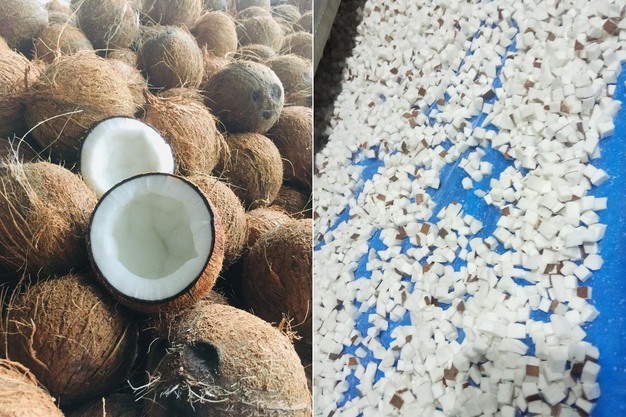
Grofarm uG also supplies frozen and ready-to-eat goods.
Expansion of cultivation capacities
Finally, Vellanaipatty Thangavel points to the great future potential of the coconut category. "Until ten years ago, coconuts were primarily found in ethnic supermarkets and specialty stores, but that has changed dramatically in recent years. Due to the large number of migrants and the large Indian community, we continue to see great marketing potential in the UK and the EU. However, listings in many European food retail markets generally indicate a welcome increase in demand. Accordingly, we are now in the process of gradually expanding our cultivation capacities at source so that we can meet the growing demand in the future."
For more information:
Navaneethan Vellanaipatty Thangavel
Grofarm uG
[email protected]
https://www.instagram.com/grofarm.eu/