Norwegian vertical farming company Grønt fra Nord AS has entered court-supervised restructuring after a planned USD 1 million convertible loan was not disbursed and significant crop losses in 2025 weakened the company's financial position.
On February 4, 2026, the Salten and Lofoten District Court, upon the company's own application, opened restructuring proceedings. A court review of the restructuring plan is scheduled for March 4, 2026. "The process provides a structured framework to implement necessary measures, safeguard operations, and work toward a long-term solution for the company," says Marius Johansen, Founder and CEO.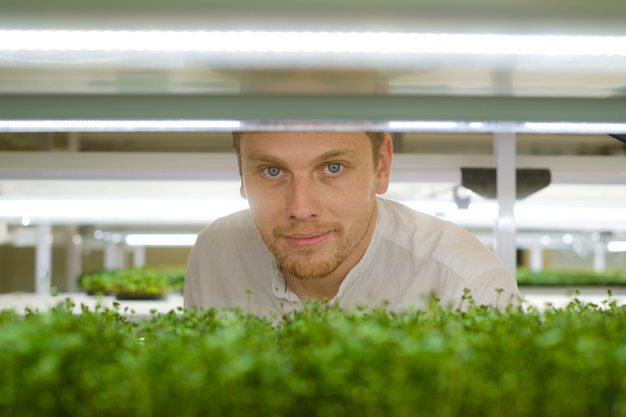 © Gront Fra Nord
Marius Johansen
Funding agreement not completed
In October 2025, the company announced it had raised USD 1.2 million toward a USD 2.4 million convertible financing round. According to Johansen, none of those funds were ultimately received. "None of the announced USD 1.2 million was received in cash. The investor pulled out after the third round of due diligence and failed AML/KYC verification."
The company had previously signed a USD 1 million convertible loan agreement with its largest investor, but the funds were never released. "The investment was fully documented and confirmed, but due to unforeseen delays on the investor's side, the funds were not released," Johansen says. The capital was intended to support automation upgrades and operational stabilization.
Biological losses in 2025
Johansen confirms that restructuring was triggered not only by the funding withdrawal but also by crop losses between April and August 2025. "Restructuring was triggered by massive biological losses, including aphids, mold, and algae, from April to August 2025, creating unsustainable debt. We chose a structured process to save operations, equipment, and jobs rather than liquidation."
Johansen says the biological issues were traced back to a combination of insufficient hygiene controls and technical failures in the climate system. "We believe the aphids entered the production either via staff or visitors. Our hygiene and access control routines for both employees and guests were simply not strict enough at the time. The main issue, however, has been that the cooling systems and ventilation did not function properly. This has now been fixed by certified personnel."
To prevent recurrence, the company has tightened access protocols and upgraded filtration. "We have introduced much stricter routines for staff, and we no longer allow guests into the production area at all. Instead, we have installed a large viewing window. In addition, we have upgraded to higher-grade filters on the ventilation system and carried out a deep cleaning of the entire facility."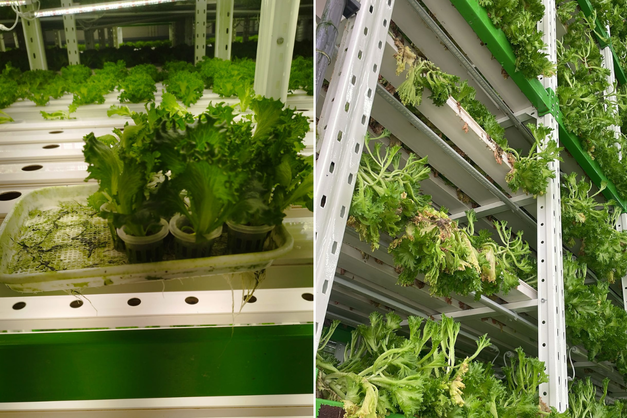 © Gront Fra Nord
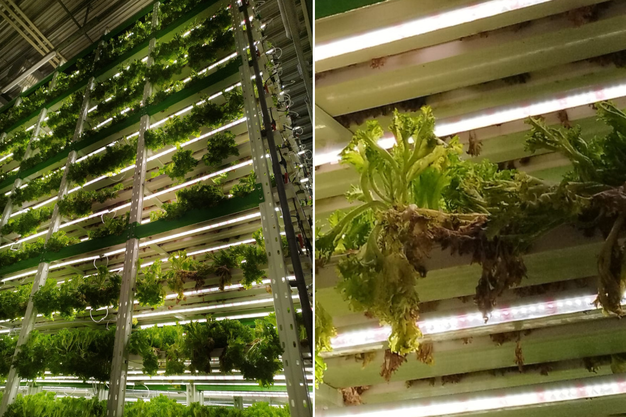 © Gront Fra Nord
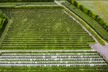
In April (above) and May (below) of 2025, the company experienced widespread crop losses, which Johansen says created unsustainable debt
Full facility reset
"We initially tried to treat only the obviously affected racks and zones. However, after the first cleaning, the problems reappeared in areas that had previously seemed unaffected. Based on that experience, I decided to clear out the entire facility, apply the temperature shock strategy, and then perform a complete wash-down again. That full reset has been the effective solution for us."
"We emptied the facility, then ran the temperature below freezing for a few days, followed by heating the building to around 50°C for several days. This thermal cycling allowed us to eliminate as much biological material as possible. On top of that, we did multiple full wash-downs of the facility both before and after the temperature changes."
Deliveries were maintained only at limited levels during remediation. "During this period, deliveries to clients were kept to a minimum and handled through small, controlled batches while we prioritised fixing the biological issues and stabilising operations."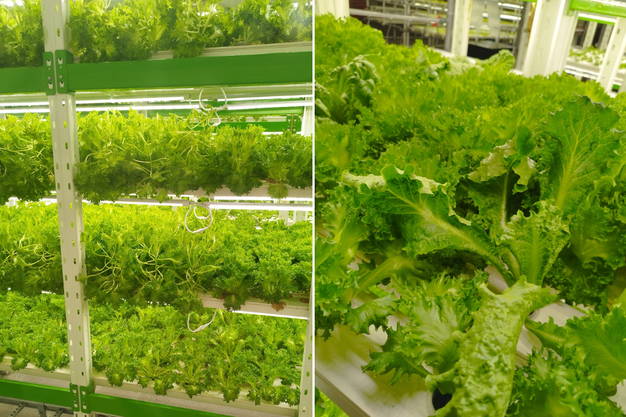 © Gront Fra Nord
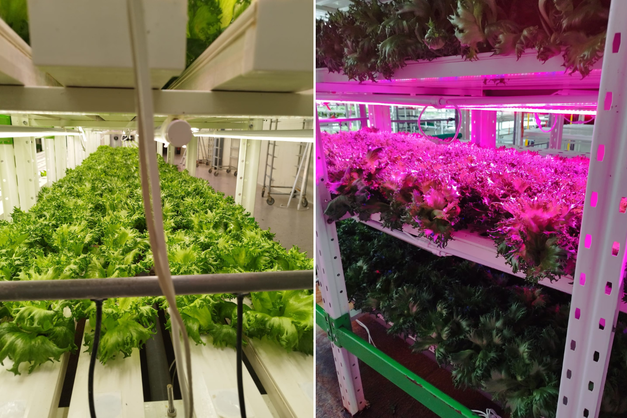 © Gront Fra Nord
From August 2025 (above) to November 2025 (below), crop development appears more stable following the full facility reset
Minimal production ongoing
"We have some minimal production ongoing, but focus is currently on the restructuring, so output is very low these days ahead of full restart after March 4. The facility is intact with solid customer agreements ready to scale up."
"We're actively seeking new investors for equity or convertible loans. Reconstruction law provides security in all equipment. We welcome investors or partners who can provide commitments ahead of the court hearing, but we won't request release of funds until everything is court-approved. This keeps capital safe while positioning investors in a company with more than 90 percent equity share and no technical debt, as shown in our tentative post-reconstruction balance sheet."
Johansen describes the restructuring as a reset phase for the company. "Restructuring is about fixing biological leaks from 2025 and building a fresh capital base. With state-of-the-art facilities, customer agreements, and legal loan security, we see clear investor opportunities ahead. March 4 is key for our restart."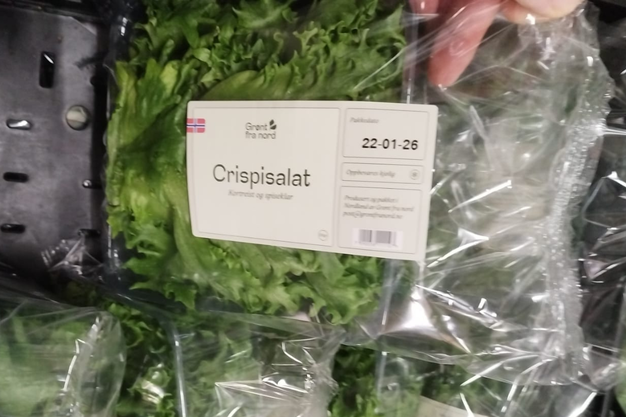 © Gront Fra Nord
Johansen says the company maintains active customer agreements and continues limited deliveries during the restructuring phase
For more information:
Grønt Fra Nord
Marius Johansen, Managing Director
+47 900 20 797
[email protected]
www.grontfranord.no