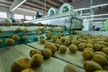
Africa exported roughly 430,000 tons of avocados in 2025, with total volumes rising 16.7%, according to the FAO Tropical Fruits Market Review. Growth was supported by demand in Europe, the Middle East, and parts of Asia, while shifts in logistics and market access reshaped export rankings.
Morocco recorded the largest expansion, with export volumes increasing around 90% year on year to approximately 141,000 tons, placing the country first on the continent for the first time. Kenya moved to second place after exports fell 19% to an estimated 105,164 tons. The FAO links the decline primarily to logistics constraints, including disruptions along key shipping corridors such as the Red Sea route.
Security concerns near the Suez Canal led carriers to divert via the Cape of Good Hope, extending transit times to Europe and increasing freight costs. For Kenya, whose main export market remains the European Union, longer transit times affect fruit quality and shelf life. By contrast, shipping from Moroccan ports such as Tangier Med to southern Europe takes a few days, compared with several weeks from East Africa when rerouted.
Morocco's production has expanded over the past five years, supported by irrigation investments and new orchards in Souss Massa and Gharb. Export packhouses have aligned grading with European supermarket standards. In Kenya, production declined in 2024 due to weather variability, but was projected to increase 4% in 2025 on expanded planted area and yields. Regulatory action also shaped flows. In late 2025, Kenya's Agriculture and Food Authority suspended some sea shipments to safeguard export standards, limiting consignments and prioritising compliance.
"It is increasingly shaped by route reliability, cold chain efficiency, and compliance systems," said Wahiga Macharia of the Avocado Society of Kenya.
European Union consumption surpassed one million tons for the first time, reaching 1.07 million tons in 2025, absorbing around 30% of global volumes, according to the World Avocado Organisation. Per capita intake averages around 2 kg in Nordic countries and Germany, 1.8 kg in the UK, and 2.3 kg in France.
South Africa exports around 40% of its 155,000 tons of annual production and is targeting India, China, and the Middle East to diversify beyond Europe. India's imports rose from 1,871 tons in 2022 to 19,120 tons in 2025. Tanzania remains the dominant origin in India due to duty-free access and transit times.
"Ports, shipping lanes, compliance regimes, and diplomatic access increasingly determine who captures value," Macharia said.
Source: Financial Fortune