Agricultural groups in the United States are responding to the U.S. Supreme Court ruling overturning the Trump administration's tariffs, with reactions differing across producing states.
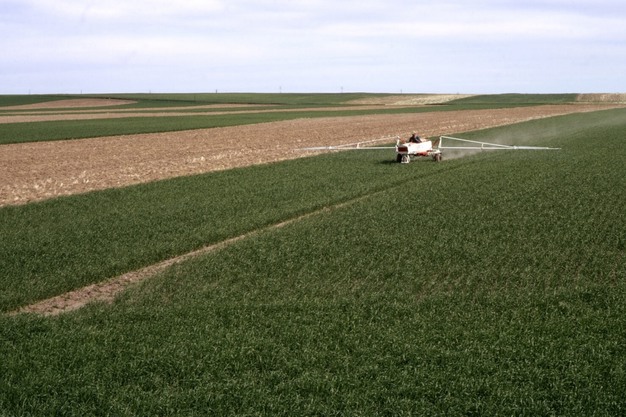
The Montana Farmers Union said the decision benefits small Montana agricultural producers. In a statement, President Walter Schweitzer said the ruling should prompt congressional action.
"The damage that was caused by the tariffs outweighs the money collected in tariff dollars. We have lost customer relationships that we spent decades cultivating," Schweitzer said. "Because of the illegal tariffs, our former customers will treat us as a supplier of last resort and supplier of lowest price, and both our customers and our competitors have developed infrastructure and relationships that exclude the USA."
 © USDA NRCS Montana
The organization had previously sought to join litigation against the federal government, citing "dire financial and mental impacts" on Montana farmers linked to the tariffs.
In Louisiana, responses reflected a different perspective. Rice farmer Brandon Vail said the tariffs were necessary to support domestic producers facing import competition.
"The countries that are exporting rice to the U.S., they're not dealing on a level playing field with us," Vail said. "Their cost of production is lower, and they're heavily subsidized by their governments. So, you're not comparing apples to apples with the rice that they're importing."
"We have enough domestic production of rice to satisfy the entire domestic market," he added. "But importers will pick up rice from other countries because they can buy it cheaper, and their markup is more — what they make."
Following the court's decision, President Donald Trump announced plans to impose a new 15 per cent tariff. Vail said he believed the move was intended to slow imports and increase domestic production.
Michael Deliberto, LSU Louisiana Farm Bureau Endowed Professor in Agricultural Policy, said the ruling introduces uncertainty into agricultural markets.
"When we have trade uncertainty that affects the demand for agricultural products, particularly in the export market, that puts a question mark over prices," Deliberto said. "Prices for old crop, meaning the crop that a farmer has in the bins or a bale of cotton that may be in a warehouse, but then what is the next 2026 crop going to look like?"
He added, "It's too early to tell what the immediate impact is going to be."
Louisiana Agriculture Commissioner Mike Strain described the ruling as "very troubling," while Vail urged Congress to act. "Negotiate, do something," he said. "Something is better than doing nothing, and nothing is what's getting done right now."
Source 1: Daily Montanan
Source 2: 7KPLC