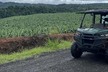
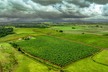
A new research project aims to help protect banana crops from Fusarium wilt Tropical Race 4 (TR4), a soil-borne disease affecting global banana production.
The project is funded by Hort Innovation and will use genetic tools to support the development of banana varieties with resistance to TR4. These tools, known as molecular markers, enable plant breeders to identify resistance traits early in the breeding process, accelerating the selection of resilient lines.
 © Hort Innovation
Led by the University of Queensland, researchers will assess non-commercial banana lines that show natural resistance to Fusarium wilt. The work will focus on identifying the genetic basis of resistance traits and translating this information into practical breeding tools. Building on previous research, the team plans to develop additional resistance markers and integrate them with existing ones to improve the reliability of resistance screening against evolving disease strains.
Anthony Kachenko, General Manager, Sustainability and Production R&D at Hort Innovation, said: "This research is critical for the long-term resilience of the Australian banana industry by giving breeders the ability to identify resistant plants early and accurately. Understanding the genetic basis of TR4 resistance in bananas will give the Australian industry greater certainty that new banana lines have durable resistance to this devastating disease over time."
The project outputs are intended to contribute to international efforts to address the impact of TR4 on productivity and supply. Resistant plants are expected to reduce losses, stabilise yields, and support grower investment decisions.
Elizabeth Aitken, Professor in Plant Pathology at the University of Queensland, said: "This project is laying the groundwork for the future of banana breeding. By identifying the genes behind Fusarium wilt resistance, researchers will open up new opportunities for innovation - ensuring the industry can access truly resistant banana varieties and continue delivering high yielding, reliable crops for years to come."
The project, coded BA24004, is funded by Hort Innovation through the banana research and development levy and contributions from the Australian Government. It builds on previous levy-funded research, coded BA21000, to strengthen preparedness for both Tropical and Subtropical Race 4 across Australian banana production regions.
 © Hort InnovationFor more information:
Shannon O'Mara
Hort Innovation
Tel: +61 (0) 427 142 537
Email: [email protected]
www.horticulture.com.au