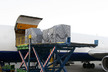
A 48-hour maritime workers' strike has halted operations across Argentina's port system, affecting cargo handling, grain exports, and vessel movements in the country's maritime and river terminals.
The stoppage began on February 18 following a call by the Federación Sindical Marítima y Fluvial in protest against a labour reform bill backed by President Javier Milei. The unions argue the proposal would reduce worker protections and exclude maritime workers from legal safeguards. The action coincides with a general strike organised by the CGT federation.
Port operations have been interrupted nationwide. In the Rosario and San Lorenzo-Timbúes complex in Santa Fe, grain loading and unloading activities have been affected. Seventeen grain terminals in the San Lorenzo-Timbúes corridor are reported closed during the strike.
 © DataLiner
In the Port of Buenos Aires and surrounding river terminals, cargo handling, mooring, and pilot services have stopped. Container traffic, general cargo flows, and import and export shipments have been disrupted. According to union statements, the stoppage extends to all 17 port terminals nationwide, including facilities serving the container, fishing, and offshore sectors.
Essential port services such as tugboat operations, pilot transfers, and vessel mooring have ceased. Tug crews, pilot boat staff, and mooring crews have suspended duties, limiting commercial vessel movements.
Industry sources and exporters report that grain shipments have been paralysed in the Rosario area and along the Paraná River basin. The grain exporters' chamber CIARA-CEC described the situation as a "complete standstill," with vessels unable to secure draft requirements to depart once partially loaded.
Fishing operations and maritime services have also been affected. Export flows of soy, corn, and wheat face delays, with effects on downstream supply chains. Argentina remains a global supplier of soy products, corn, and grains.
Import flows of industrial inputs and containerised goods are also impacted, with vessel schedules disrupted.
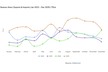
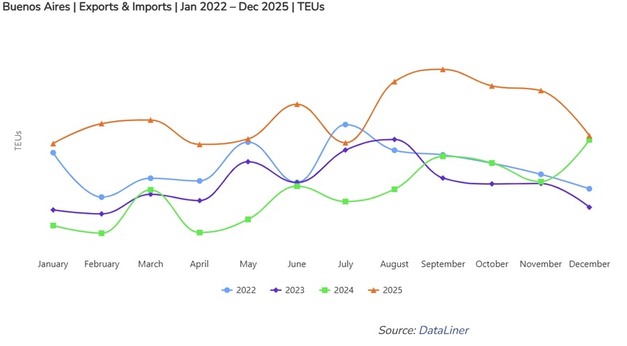
According to Datamar's DataLiner platform, the Port of Buenos Aires recorded a 37.8 per cent increase in long-haul container throughput in 2025 prior to the strike.
The labour action forms part of broader opposition to the proposed reform bill, which has passed the Senate and is under debate in the lower house. The national strike organised by the CGT has added further pressure on transport and logistics networks, including ports and related services.
Source: Reuters; Veja; La Nación / DatamarNews