New peer-reviewed research conducted by Cranfield University and published in Agricultural Water Management has assessed the environmental performance of apples in the UK supply chain between 2016 and 2025. The study examined greenhouse gas emissions and blue water scarcity impacts, comparing domestic production with imports from Europe and the Southern Hemisphere.
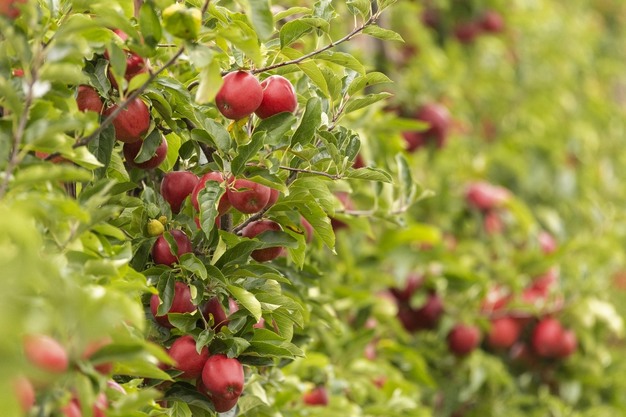
The findings indicate that British apples have a negligible blue water scarcity footprint due to predominantly rain-fed production systems. By contrast, imports from some regions, including parts of South Africa and Spain, contribute more heavily to water scarcity impacts because of irrigation in water-stressed areas. Although these imports account for a minority share of total UK apple volume, they represent most of the water scarcity impact associated with apple consumption in the country.
 © British Apples & Pears
Ali Capper, executive chair of British Apples & Pears Limited, said: "This research provides robust, independent evidence that British apples play a crucial role in reducing exposure to global water risk within the UK supply chain. It underlines the strategic importance of domestic production as retailers and policymakers look to balance sustainability, resilience, and food security."
She also noted the role of cold storage infrastructure in emissions performance.
"The research also highlights the importance of energy-efficient cold storage. Government support through capital allowances would enable growers to further invest in modern, low-carbon storage infrastructure, helping to cut emissions, improve efficiency, and secure a reliable and even better year-round supply of British apples."
Regarding greenhouse gas emissions, the study found that total emissions per kilogram at the orchard level are broadly comparable across UK, European, and Chilean apples. Cold storage was identified as the largest contributor to post-harvest emissions before onward transport. When maritime shipping is included, Southern Hemisphere imports recorded higher post-harvest emissions than Northern Hemisphere apples.
Tim Hess, Emeritus Professor of Water and Food Systems at Cranfield University and lead author, said: "Our analysis shows that sourcing decisions matter. Apples grown in the UK and Northern Europe deliver low water-scarcity impacts while maintaining comparable greenhouse gas performance. This highlights the value of regional sourcing in managing environmental trade-offs across the supply chain."
The research identifies cold storage efficiency, electricity decarbonisation, and yield optimisation as primary areas for further emissions reduction. It also notes the importance of maintaining a resilient and diverse supply base while recognising the environmental performance of British apples within the overall sourcing mix.
 © British Apples & PearsFor more information:
British Apples & Pears
Tel: +44 (0) 1507 353778
Email: [email protected]
www.britishapplesandpears.co.uk