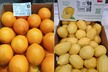
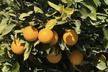
Mandarin suppliers in Bhutan are facing financial exposure as advance payment-based orchard booking arrangements coincide with increasing fruit drop and lower production.
Under the current system, suppliers receive advance payments from exporters after booking orchards during flowering or before the fruit is fully ripened. Widespread citrus fruit drop has reduced volumes, leaving some suppliers unable to deliver quantities matching the advances received. Suppliers have requested the Ministry of Agriculture and Livestock to consider alternatives that do not require full advance payments.
Agriculture Secretary Thinley Namgyel said mandarin exports, like other businesses, experience fluctuations. Production levels and export prices, both domestically and internationally, influence outcomes. He noted that 2024 was a good year for mandarin exports.
For the 2025 season, production is lower due to fruit drop. After visiting export depots in Phuentsholing, Chhukha, and Gelephu, Sarpang, he said exporters reported reduced volumes. "However, the price per box is fairly good, ranging from US$20 to 28, due to limited supply," he said. He added that reduced volumes may be offset by higher values, pending confirmation in Trade Statistics 2026.
Premature fruit drop before harvest, caused by fruit fly infestation, is identified as the main factor behind lower output. "In recent years, fruit drop has been increasing due to climate change and poor orchard management by farmers," Thinley Namgyel said. Advocacy campaigns on orchard management and fruit disposal are ongoing, although control requires collective action. "These neglected orchards undermine control efforts, making community participation and good orchard management essential," he said.
On the advance payment system, Thinley Namgyel said no changes are planned. "We don't see the need, as such arrangements are part of any normal business transaction between buyers and suppliers." He referred to the National Crop and Livestock Insurance Scheme, under which mandarin oranges are covered. Farmers pay a premium of 5.8 per cent of the insured sum, shared equally with the government. "The Ministry encourages all farmers to avail themselves of this facility to protect their livelihood," he said.
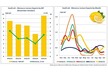
Exports since January 1 total 16,165 tons, valued at approximately US$8.15 million. India and Bangladesh remain the main markets. In 2024, exports reached approximately US$9.18 million, up 33.36 per cent year on year, with volumes at 19,445 tons. Mandarin oranges are grown in 19 dzongkhags by 26,963 growers, with Dagana and Samdrupjongkhar leading production.
Source: Kuensel