Blue Maldiva, a jumbo blueberry variety developed by Planasa, is being grown in multiple regions with contrasting agronomic conditions. Growers in Mexico and China report on productivity, fruit size, and crop management performance under their respective environments.
 © Planasa
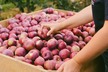
In Ahualulco, Mexico, José Urbina introduced Blue Maldiva after working with other varieties that presented plant health and export quality challenges. According to Urbina, the variety produces large fruit with firmness, sweetness, and flavour suited to international markets. He states that between 60% and 80% of production falls into the jumbo category.
 © Planasa
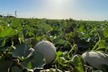
The plant shows a more restrained architecture compared to other varieties. "A single Blue Maldiva cluster can be as productive as dozens of branches from previous varieties that produced smaller sizes," Urbina says. He also notes that plants reach full production approximately 150 days after pruning.
Urbina reports lower input requirements in nutrition and crop protection, linked to reduced susceptibility to pests and diseases. In terms of irrigation, he estimates consumption at around 200 litres per hectare, compared with 600 litres per hectare in other varieties. Larger and more uniform fruit size has also influenced harvest efficiency, with higher daily picking volumes reported.
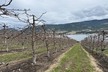
In Yunnan province, China, Blue Maldiva is cultivated at an altitude of almost 1,900 metres. Xiaobao Ge, head of Yunnan Baoming Agriculture, manages a 30-hectare farm in this region. "At this height, the fruit tastes better, more aromatic and sweeter, and it is also crisper. Compared with lower-altitude areas, its performance is far more outstanding," he explains.
The farm evaluated multiple varieties before selecting Blue Maldiva. Key considerations included productivity, fruit calibre, and disease resistance. During trials, berries reached sizes of 18+ and 20+ mm at early ripening stages, with more than 80% of fruit exceeding 22 mm. Measurements also recorded fruit of 25+ and 27 mm.
 © Planasa
"I really like Blue Maldiva overall, and I am very satisfied with its performance," Ge says.
Blue Maldiva is also being grown in other countries, including Spain, Morocco, Peru, and Southern Africa. According to the growers cited, varietal selection remains a strategic decision as markets continue to focus on fruit size, flavour, and yield efficiency.
 For more information:
Planasa
Email: [email protected]
www.planasa.com