Thai durian exports are expected to encounter multiple constraints this season, linked to labour availability, collection capacity, and logistics during peak harvest periods.
Total durian supply in Thailand is forecast at 1.78 million tons this year, according to Wittayakorn Maneenetr, director-general of the Department of Internal Trade (DIT). The eastern region is expected to account for 1.06 million tons, or 59.5 per cent of national output. "Assuming the weather does not negatively impact the harvest season starting in April, we anticipate durian supply will increase by 10% year-on-year," he said.
By comparison, Vietnam's durian production is projected to reach 2 million tons this year, further shaping regional supply dynamics.
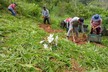
DIT identified labour shortages as a key constraint for the sector. The number of experienced Cambodian workers has declined, affecting farm operations and packing activities. Although workers from Myanmar are entering the sector, they require training to meet harvest and post-harvest requirements, according to Wittayakorn.
Export controls remain another challenge. Thai durian exports to China are subject to strict inspections for chemical residues, including Basic Yellow 2 dye and cadmium. DIT said it continues to work with Chinese authorities to inspect shipments and determine the sources of contamination.
Harvest timing is also expected to create logistical pressure. Durian output in the eastern region is forecast to peak between March and June, while production in southern and other regions is likely to begin from June through August. As a result, supply from the eastern and southern regions may overlap in June.
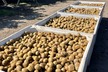
DIT anticipates a shortage of durian collection centres during this overlap period. These centres act as intermediaries between growers and exporters, and limited capacity could constrain the intake of fruit from southern regions. The department also expects a container shortage during the peak export window.
For exports to China, two main land routes are currently used. One passes through Thailand's northeastern border via Laos and Vietnam into China's Guangxi Zhuang Autonomous Region. The second route runs from northern Thailand through Laos or Myanmar to China's Yunnan province via the R3A corridor. DIT said facilitating shipments along the R3A route from Chiang Khong to Kunming via the Boten checkpoint could support access to western and central China.
Beyond China, DIT reported market testing of chilled and frozen durian in Middle Eastern countries, as well as efforts to raise awareness of Thai durian among Indian visitors. Domestic consumption initiatives are also planned through retail promotions and mobile grocery distribution in smaller communities.
Source: Bangkok Post