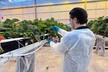
Based in a 6,000-person town called Sisimiut, which means "place for foxholes", the city is known for housing the country's largest shrimp factory and its trade in Arctic crabs and cod. A farm located in the heart of the city, unable to withstand the harsh environment, closed its doors two years ago. Without hesitation, Palli acquired the growing equipment, surfed the web for DIY hydroponics videos, and gave it a go.
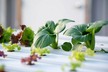
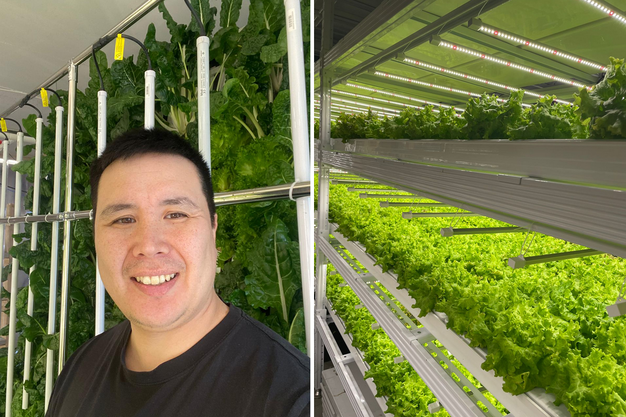
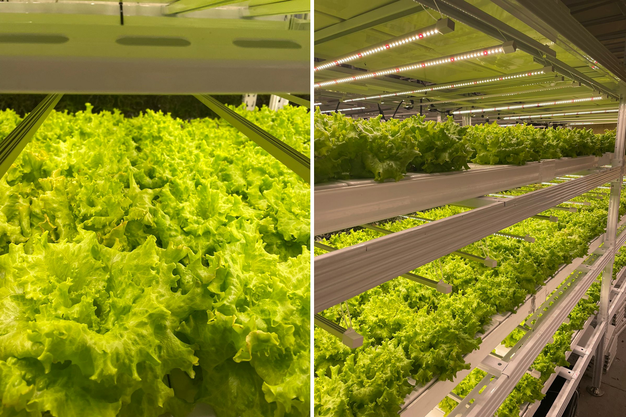
The DWC system uses wide trays and resembles an NFT setup, growing leafy greens horizontally. A second system is installed vertically, producing tomatoes and other crops. "It's been a rollercoaster from the get-go. Everything I know is from the internet, and learning the hard way," says Palli Fleischer Lyberth, CEO of Sisimiut Fresh Farms.
 © Sisimiut Fresh Farms
Palli Fleischer Lyberth
That perseverance has paid off over time. With a growing interest in his locally grown lettuce, Palli now supplies local supermarkets, hotels, and cafés. Since October 2025, another system has been added, bringing total production capacity to around 8,820 greens. The product range includes peashoots and radish microgreens, as well as Batavia lettuce, which is still proving challenging. "It has been difficult to battle mold with this variety, which I am not very good at yet." Hotels, meanwhile, prefer butter lettuce due to its scarcity and consistent quality.
Sisimiut has shown strong demand for locally grown lettuce, with crispy varieties clearly leading the way. "For 2026, I'd like to increase our presence in the service industry and retail. Once I started selling salad mixes to local supermarkets, more people approached us because it stood out." Aiming to grow Arugula salad mixes isn't without reason, as they're now sold for 25 Krona (€3.35) per bag, while in retail Palli can sell it for around 30 Krona (€4.01).
 © Sisimiut Fresh Farms
Microgreens are still relatively new to Greenlandic consumers. Hotels receive microgreens with the cocopeat still attached, which reduces labor and waste. "With our current prices, I am competitive with imports, especially as freight costs are extremely high. On top of that, imported produce often arrives watery and deteriorates before reaching the shelves. Imported lettuce currently sells for around €6.69 per kilo."
Food miles remain a sensitive topic. Due to its geography and scale, Sisimiut is supplied regionally by car and uses air freight for longer distances. For shipments of 50 or more packages, Palli reduces the price by 5 Krona per package and covers half of the transport costs. "Outside Sisimiut, it's a neck-and-neck race. If I don't make an attractive offer, imported goods quickly become cheaper."
Currently supplying two local supermarkets, Palli hopes to secure long-term agreements to stabilize revenue. As Sisimiut Fresh Farms grows, increased capacity should enable more stores to be consistently supplied. "Every six to eight weeks, I reassess where and how I can expand. If retailers trust me and my product, I hope they'll eventually drop imported produce."
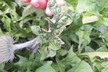
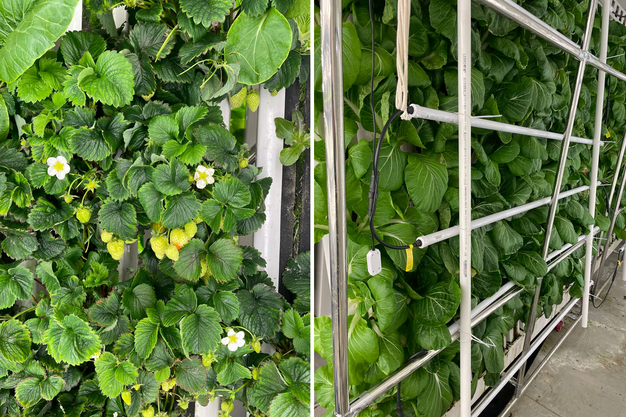 © Sisimiut Fresh FarmsStrawberries and pak choi
"My biggest pitfall is not owning my current facility. Rent alone costs me €1,800 per month, which is equal to my electricity bill. That makes long-term profitability very difficult." With one worker assisting throughout the week, Palli sees packaging equipment as a future investment to improve efficiency.
A potential government subsidy could provide the capital needed to expand into cherry tomatoes, cucumbers, mushrooms, and additional lettuce production through a combination of vertical farming and greenhouse systems. "It's a hassle to reel in government support. Many want to help financially, but the municipality doesn't seem aligned with the goals we're pursuing. It takes a lot of time for that to sink in."
"As I increase my cultivation area, I can produce more volume and work towards a healthier profit margin in the long term."
 © Sisimiut Fresh Farms
For more information:
Sisimiut Fresh Farms
Palli Fleischer Lyberth, CEO
[email protected]
+2 995 992 42