The agricultural sector in Sardinia, Italy, especially tomato and artichoke production, is experiencing a severe crisis. Adverse and prolonged climatic conditions, including intense rainfall and persistent humidity, have damaged crops and contributed to the spread of diseases, such as botrytis and downy mildew. These conditions have led to a significant reduction in production and a decline in crop quality.
 © AGRO MEDITERRANEA DISTRIBUZIONE SRL
A significant production gap is expected in March for tomatoes, with a similar short-term outlook for artichokes. Contrary to what market logic would suggest, this product shortage does not result in a proportional increase in selling prices for producers. In fact, trade is slow because consumers are feeling the effects of inflation, and there is a lot of competition, including unfair practices such as undeclared labor and intense competition from foreign products.
Andrea Manca and Filippo Frongia, partners at Agro Mediterranea Distribuzione, a company that supplies fruits and vegetables to large retailers, analyze the situation and explain how the artichoke and tomato campaigns are going.
 © AGRO MEDITERRANEA DISTRIBUZIONE SRL
Tomato
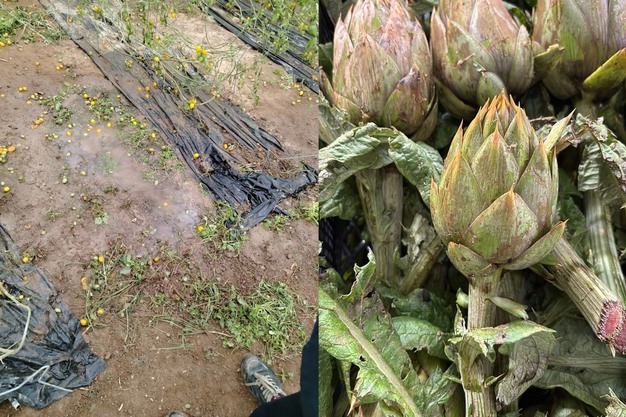
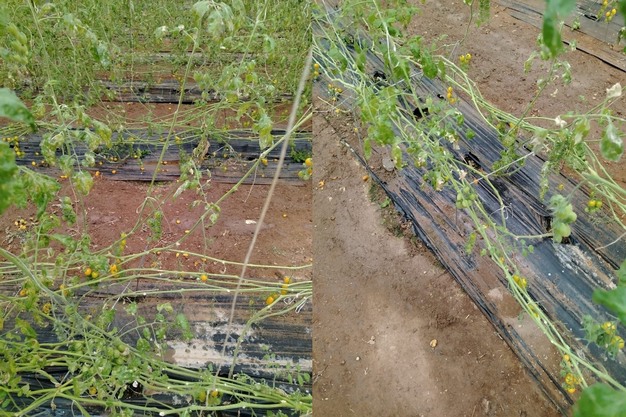
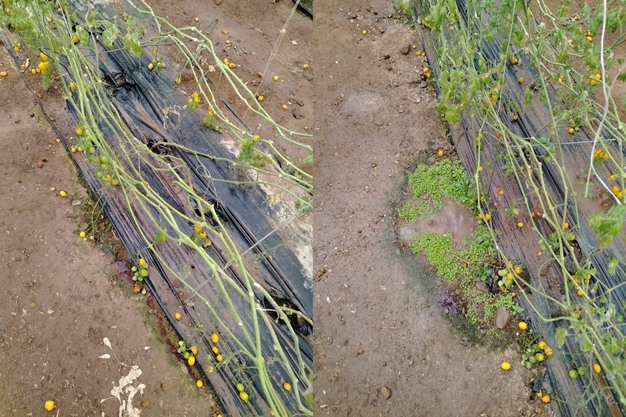
"Tomato crops are suffering extensive damage due to an exceptionally bad weather trend that goes beyond the recent Cyclone Harry," Manca explains. "This critical situation is the result of continuous and intense rainfall; the amount of rain that usually falls over the course of a year fell in just two months, combined with extremely high relative humidity and the persistence of the Scirocco wind for about two months, which prevented the fields from drying out. The consequences for the crops are clear. Plants are affected by fungal diseases. Some examples are botrytis and downy mildew. Cherry tomato plants, in particular, are severely damaged, and their productivity is compromised. To limit the damage, irrigation and fertilization must be reduced. However, this causes the plants to become woody, which further reduces their productivity. In the worst-affected areas, it has become necessary to remove all damaged plants to avoid additional labor expenses on unprofitable crops."
 © AGRO MEDITERRANEA DISTRIBUZIONE SRL
Manca adds, "A strong production gap is expected in March. This critical situation will affect not only Sardinia, but also other key regions like Sicily." "The current production cycle will end prematurely, stopping before its usual completion in June. This will eliminate any overlap between the end of the old cycle and the start of the new one, with production unlikely to resume before July."
Artichoke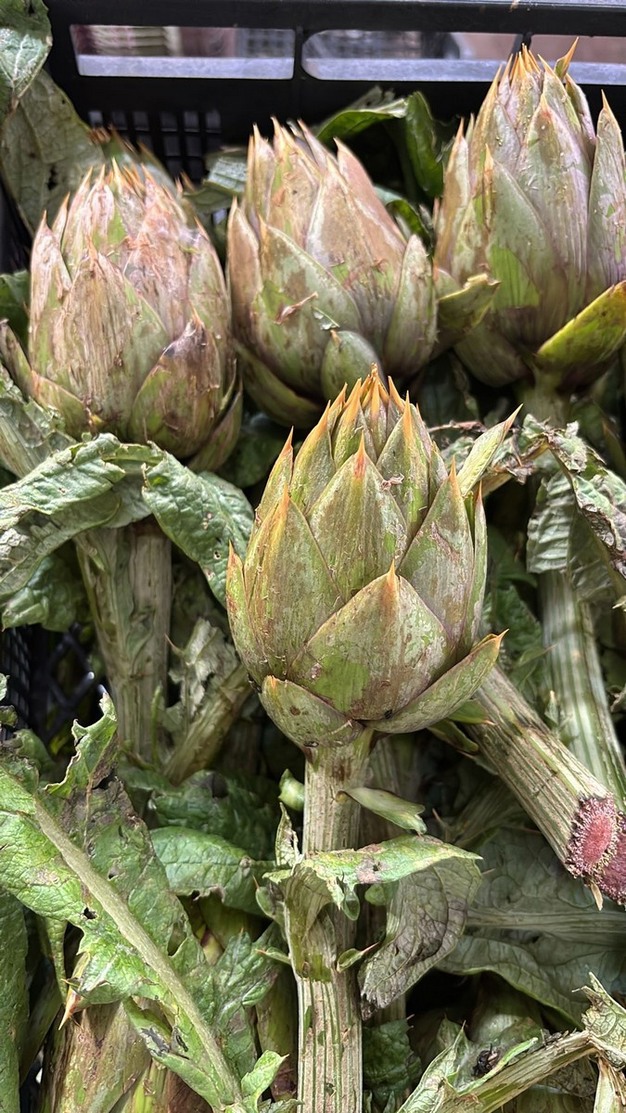 © AGRO MEDITERRANEA DISTRIBUZIONE SRLAdverse weather conditions also greatly impacted artichoke production, albeit in different ways. "The problems stem from bad weather, sub-zero temperatures, continuous rainfall, and very high humidity levels. Product availability is low, and much of it ends up spoiling," Frongia explains. "The most common damages are classic frost cracks and botrytis problems, which cause significant waste, especially for products intended for packaging. The plants themselves are weakened by excess water and frost, further exacerbating the situation."
According to Frongia, these phenomena, though serious, are normal. He emphasizes, "Analysis of historical data reveals a cyclical trend that repeats itself approximately every three years. The last precedent occurred in February 2023. Mild temperatures during the Christmas and New Year period lead to overproduction, followed by frost and rain between January and February. This inevitably causes a production gap. This year, the gap is expected in about ten days, at the end of the current harvest cycle. There will be a gap between the early and late productions."
Market dynamics and commercial challenges
"Sales are weak across all products, likely due to reduced consumer purchasing power caused by inflation. "Product shortages do not allow prices to rise enough to offset lost volumes, making it difficult to cover production costs," says Manca. Frongia adds, "Prices for artichokes have increased, but not to their full potential, due to quality defects."
When domestic production cannot meet demand, the market relies heavily on imports, particularly tomatoes from the Netherlands. This highlights a contradiction in the system. Although the "Made in Italy" concept is important, purchasing decisions are often driven by price. This favors foreign products and contributes to the economic development of other countries," Manca points out.
In addition to market challenges, there is a serious labor market problem. "Among the younger generations, we observe a widespread inability to cope with work stress. For this reason, to guarantee continuity and reliability, we are moving towards hiring more experienced workers, conclude Manca and Frongia.
For more information: Andrea Manca - Sales Manager
Tel.: +39 342 3390390
Agro Mediterranea Distribuzione Srl
S.P. 56 Km 0.500 Loc. Perdalba
09027 Serrenti (SU) - Italy
[email protected]
www.agromed.it